Category: Countertops

  • Best Low Maintenance Countertop Materials: Top Picks

    Best Low Maintenance Countertop Materials: Top Picks

    Choosing the right countertop material is one of the most impactful decisions you’ll make during a kitchen or bathroom remodel. The surface you pick will be touched, cleaned, and tested every single day — by hot pans, spilled coffee, chopping boards, and everything in between. Getting this choice wrong means years of frustrating upkeep, staining, and costly repairs.

    Low maintenance countertops have become a top priority for homeowners, renters, and designers alike. The appeal is simple: you want a surface that looks great without demanding constant attention. Whether you’re managing a busy family kitchen or upgrading a rental property, the right material can save you significant time, effort, and money over the long haul.

    This guide breaks down the best low maintenance countertop materials available, comparing durability, cleaning ease, cost tiers, and real-world performance. You’ll walk away knowing exactly which surface fits your lifestyle, your budget, and your home improvement goals.

    What Makes a Countertop Truly Low Maintenance?

    Defining Low Maintenance: Durability, Care, and Stain Resistance

    A truly low maintenance countertop does three things well: it resists damage, it cleans up easily, and it doesn’t require regular professional treatment to stay in good condition. Stain resistance is the most obvious factor — nobody wants to scrub red wine or tomato sauce out of a porous surface every week.

    Durability goes hand in hand with maintenance. A surface that chips, cracks, or scratches easily will demand repairs and replacements far sooner than a tougher alternative. The best low maintenance materials combine physical toughness with surface-level resilience.

    Sealing requirements are a major differentiator. Some materials, like natural stone, need periodic sealing to maintain their stain resistance. Others, like quartz or porcelain, are non-porous by nature and never need sealing at all.

    Material Sealing Required Stain Resistance Maintenance Level
    Quartz No Excellent Very Low
    Granite Yes (periodic) Good (when sealed) Low-Medium
    Porcelain No Excellent Very Low
    Solid Surface No Good Low
    Laminate No Moderate Low
    Marble Yes (frequent) Poor-Moderate High
    Concrete Yes (regular) Moderate Medium-High
    Butcher Block Yes (oiling) Poor High

    Key Performance Factors: Heat, Scratch, and Impact Resistance

    Heat resistance matters enormously in a working kitchen. Placing a hot pan directly on a surface that can’t handle it leads to discoloration, cracking, or permanent damage. Porcelain and sintered stone lead the pack here, while solid surface materials and laminate are more vulnerable to heat damage.

    Scratch resistance is equally critical, especially in high-traffic kitchens. Quartz scores very well on scratch resistance, though it’s not completely scratch-proof. Granite and porcelain are among the hardest natural and engineered options available.

    Impact resistance — the ability to absorb a dropped pot or heavy object without chipping — is where some harder materials actually fall short. Porcelain, for example, can chip at edges if struck sharply, despite its impressive surface hardness.

    How Lifestyle and Kitchen Usage Affect Material Choice

    A professional home cook who uses their kitchen intensively every day has very different needs from someone who rarely cooks and mostly uses their kitchen for light meal prep. High-heat cooking, frequent chopping, and heavy daily cleaning all stress countertop materials differently.

    Families with young children need surfaces that resist juice stains, crayon marks, and the general chaos of daily life. Rental property owners need something that can withstand tenant turnover without requiring professional restoration between leases.

    Your bathroom countertop faces different challenges than your kitchen surface — less heat, but more exposure to cosmetics, hair dye, and cleaning products. Understanding your actual usage patterns is the first step toward choosing the right material.

    Top Low Maintenance Countertop Materials Compared

    Quartz: Engineered Consistency, Stain Resistance, and Everyday Ease

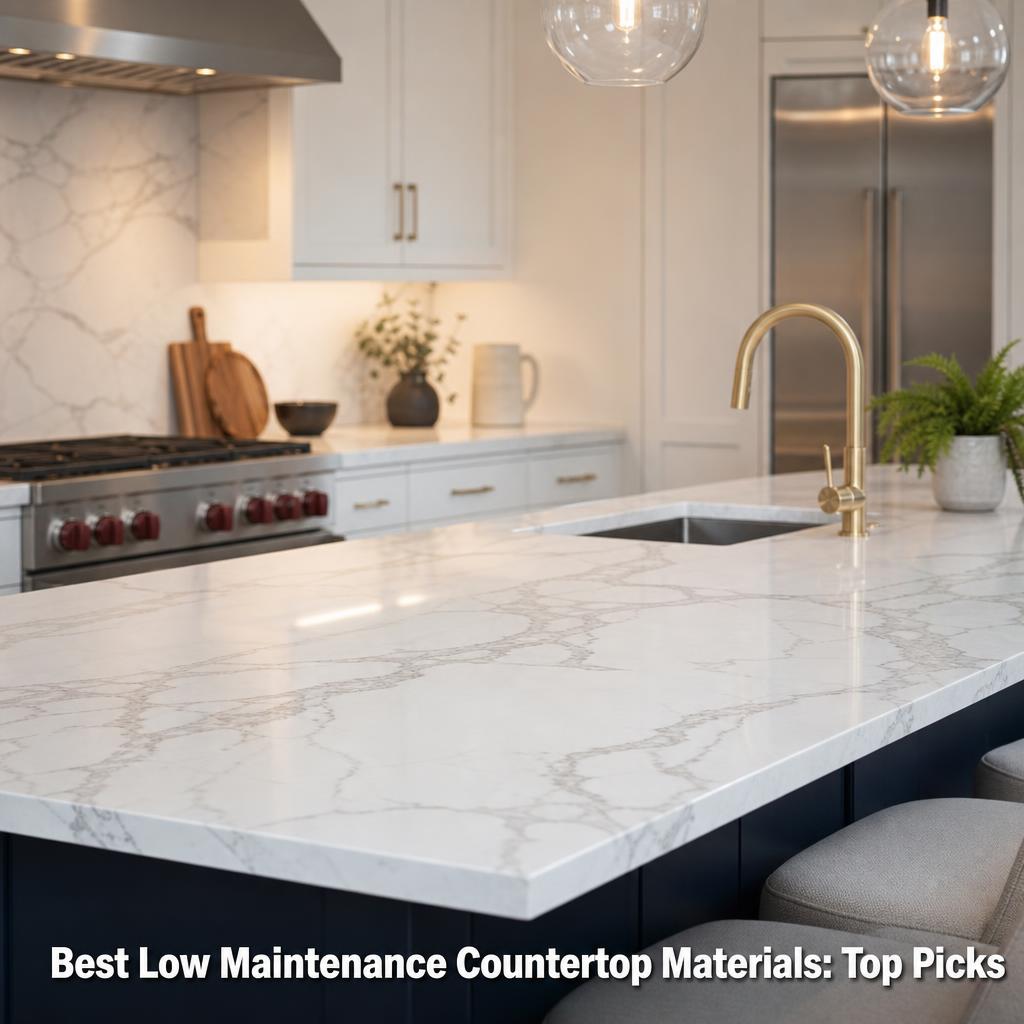
    Quartz is the gold standard for low maintenance countertops, and for good reason. As an engineered stone made from natural quartz crystals bound with resin, it delivers a non-porous surface that resists staining, scratching, and bacterial growth without any sealing required.

    For anyone researching the best countertop material for a busy kitchen, quartz consistently ranks at the top because it handles daily abuse with minimal fuss. A simple wipe with warm soapy water is all it takes to keep it looking pristine.

    The one limitation of quartz is heat sensitivity. The resin binders can discolor or warp under sustained high heat, so trivets and hot pads are still recommended. That said, for the vast majority of home kitchens, this is a minor trade-off against its many advantages.

    Solid Surface (e.g., Acrylic Composites): Seamless Look and Simple Repair

    Solid surface countertops, made from acrylic or polyester composites, offer a unique advantage: they can be repaired. Minor scratches and surface damage can be sanded out and buffed back to a smooth finish, which is something no natural stone or porcelain can offer.

    The seamless installation is another major benefit. Solid surface materials can be joined invisibly, and integrated sinks can be fabricated from the same material, eliminating the grout lines and seams where bacteria and grime typically accumulate.

    Solid surface is not as scratch-resistant as quartz or granite, and it’s more vulnerable to heat damage. However, its repairability and hygienic seamless design make it an excellent low maintenance choice for both kitchen and bathroom applications.

    Porcelain and Sintered Stone: Ultra-Durable, Heatproof, and Hygienic

    Porcelain slabs and sintered stone represent the cutting edge of countertop technology. These materials are fired at extreme temperatures, creating an incredibly dense, non-porous surface that resists heat, scratches, stains, and UV fading better than almost any other option.

    Sintered stone, in particular, can handle direct contact with hot pots and pans without damage — a genuine advantage over quartz and solid surface. It’s also completely non-porous, meaning no sealing is ever required and bacterial growth is effectively prevented.

    The main drawback is edge vulnerability. Because these materials are very hard and relatively thin, sharp impacts at the edges can cause chipping. Professional installation with careful edge treatment is essential to get the best long-term performance from porcelain countertops.

    Compact Laminate and High-Pressure Laminate: Budget-Friendly, Wipe-Clean Surfaces

    Laminate has come a long way from its early reputation as a cheap, easily damaged surface. Modern high-pressure laminate and compact laminate options offer impressive durability, a huge range of design options, and genuinely easy cleaning — all at an entry-level price point.

    Compact laminate is significantly thicker and more durable than standard laminate, with better resistance to moisture, impact, and everyday wear. It’s a popular choice for rental properties and high-traffic commercial kitchens precisely because it performs well and costs far less than premium alternatives.

    The limitations are real: laminate can be damaged by sustained heat, and deep scratches cannot be repaired — the entire surface must be replaced. However, for budget-conscious buyers who prioritize easy cleaning and low upfront cost, modern laminate is a genuinely competitive option.

    Granite and Other Natural Stones: Sealing Needs vs. Long-Term Performance

    Granite remains one of the most popular countertop materials for good reason. It’s naturally hard, heat-resistant, and available in a stunning range of colors and patterns. When properly sealed, granite offers solid stain resistance and can last a lifetime with reasonable care.
    Featured image

    The maintenance requirement that sets granite apart from truly zero-maintenance options is periodic sealing. Depending on the specific stone and its porosity, granite may need resealing annually or every few years. Skipping this step allows liquids to penetrate the surface and cause permanent staining.

    Marble, while beautiful, is significantly more demanding than granite. It’s softer, more porous, and highly susceptible to etching from acidic substances like lemon juice or vinegar. For most busy kitchens, marble is a high-maintenance choice that requires careful daily management to preserve its appearance.

    Features, Benefits, Pricing, and User Experience

    Feature Breakdown: Non-Porous Surfaces, Integrated Sinks, and Edge Options

    Non-porous surfaces are the single most important feature for low maintenance performance. Materials like quartz, porcelain, and solid surface don’t absorb liquids, which means stains sit on the surface rather than penetrating it. A quick wipe is usually all that’s needed.

    Integrated sinks, available with solid surface and some quartz fabrications, eliminate the seam between countertop and sink — one of the most common places for mold, grime, and bacteria to accumulate. This design feature alone can significantly reduce your weekly cleaning effort.

    Countertop edges also affect maintenance. Beveled, eased, or flat edges are far easier to clean than ornate ogee or bullnose profiles, which have more surface area and crevices where debris can collect. Choosing a simpler edge profile is a practical low maintenance decision that’s easy to overlook during the design phase.

    Practical Benefits: Cleaning Effort, Stain Prevention, and Hygiene

    The practical day-to-day benefit of a low maintenance countertop is time saved. Non-porous surfaces like quartz and porcelain require nothing more than a damp cloth and mild soap for routine cleaning. There’s no need for specialty cleaners, sealers, or professional treatments.

    Stain prevention is largely built into the material itself when you choose a non-porous option. Spills from coffee, wine, oil, and acidic foods can be wiped away without leaving a trace, provided they’re not left to sit for extended periods.

    Hygiene is a genuine concern in kitchen environments. Non-porous countertops don’t harbor bacteria in surface pores, making them a safer choice for food preparation areas. This is particularly important for families with young children or anyone with health sensitivities.

    Cost Comparison: Material, Fabrication, Installation, and Long-Term Value

    Countertop pricing is driven by several interconnected factors: the raw material itself, the complexity of fabrication, the difficulty of installation, and the long-term cost of ownership. Understanding these layers helps you make a smarter investment decision.

    At the entry level, laminate offers the lowest upfront cost for both material and installation. Solid surface sits in the mid-range tier, costing more than laminate but less than premium stone or engineered options. Quartz and granite occupy the mid-to-premium range, while porcelain slabs and sintered stone tend to sit at the premium end due to the specialized fabrication equipment required.

    Long-term value shifts the equation significantly. A laminate countertop that needs replacement after moderate use may ultimately cost more than a quartz surface that lasts decades with minimal care. Fabrication complexity — cutouts for sinks, unusual shapes, and edge profiles — adds cost regardless of material. For an accurate picture of what your specific project will cost, request a written quote from a qualified fabricator who has seen your actual space.

    User Experience: Everyday Maintenance, Repairs, and Resale Appeal

    Real-world user experience with low maintenance countertops consistently highlights the same themes: ease of daily cleaning, confidence in the surface’s durability, and satisfaction with the long-term appearance. Quartz users frequently report that their countertops look as good after years of use as they did on installation day.

    Repair experience varies significantly by material. Solid surface is the clear winner for repairability — scratches and minor damage can be professionally sanded out. Quartz and granite chips can be filled with color-matched epoxy, though the repair is rarely invisible. Laminate and porcelain, once damaged, typically require full replacement of the affected section.

    Resale appeal is a real consideration for home improvement projects. Quartz and granite consistently rank among the countertop materials that buyers respond most positively to during home sales. A well-chosen, well-maintained countertop can meaningfully contribute to your home’s perceived value and marketability.

    Best Alternatives and How to Choose the Right Material

    Low Maintenance Alternatives for Budget-Conscious Buyers

    Budget-conscious buyers don’t have to settle for poor performance. Modern compact laminate and high-pressure laminate options deliver genuinely impressive low maintenance performance at entry-level pricing. The key is choosing a quality product from a reputable manufacturer rather than the cheapest available option.

    Solid surface is another strong mid-range alternative that offers better durability and repairability than laminate, with a more premium appearance. For bathroom countertops where heat resistance is less critical, solid surface is an excellent value proposition.

    • Compact laminate: entry-level cost, easy cleaning, limited heat resistance
    • Solid surface: mid-range cost, repairable, seamless design options
    • Entry-level quartz: mid-range cost, non-porous, excellent stain resistance
    • Sealed granite: mid-to-premium cost, natural beauty, requires periodic sealing

    Options for Busy Families, Rental Properties, and High-Traffic Kitchens

    Busy families need countertops that can handle chaos without showing it. Quartz is the most recommended option for family kitchens because it resists the full range of daily abuse — food stains, crayon marks, juice spills, and heavy daily use — without requiring any special treatment.

    Rental property owners have different priorities. Durability, ease of replacement, and cost efficiency matter more than premium aesthetics. Compact laminate and entry-level quartz are both strong choices for rental applications, offering good performance at manageable cost.

    High-traffic commercial-style home kitchens benefit most from porcelain or sintered stone, which can handle the heat, heavy use, and frequent cleaning that serious cooking demands. These materials are genuinely built for intensity.

    Key Buying Considerations: Warranty, Installer Quality, and Environmental Impact

    Warranty coverage is an often-overlooked buying consideration. Premium quartz brands typically offer substantial manufacturer warranties covering defects and sometimes even staining. Always read the warranty terms carefully — some require professional installation to remain valid.

    Installer quality has a direct impact on long-term maintenance. A poorly installed countertop, regardless of material, will develop problems faster than a well-installed one. Seams, edge treatments, and sink cutouts all require skilled fabrication to perform correctly over time.

    • Ask for references and examples of completed installations
    • Confirm the fabricator has experience with your chosen material
    • Verify warranty terms and installation requirements before signing
    • Ask about environmental certifications for materials like quartz and solid surface

    Environmental impact is increasingly important to buyers. Some quartz manufacturers use recycled content and low-VOC resins. Porcelain and sintered stone are made from natural minerals without synthetic binders. Asking your supplier about environmental credentials is a reasonable and worthwhile step.

    Step-by-Step Buying Advice: From Showroom Visit to Final Installation

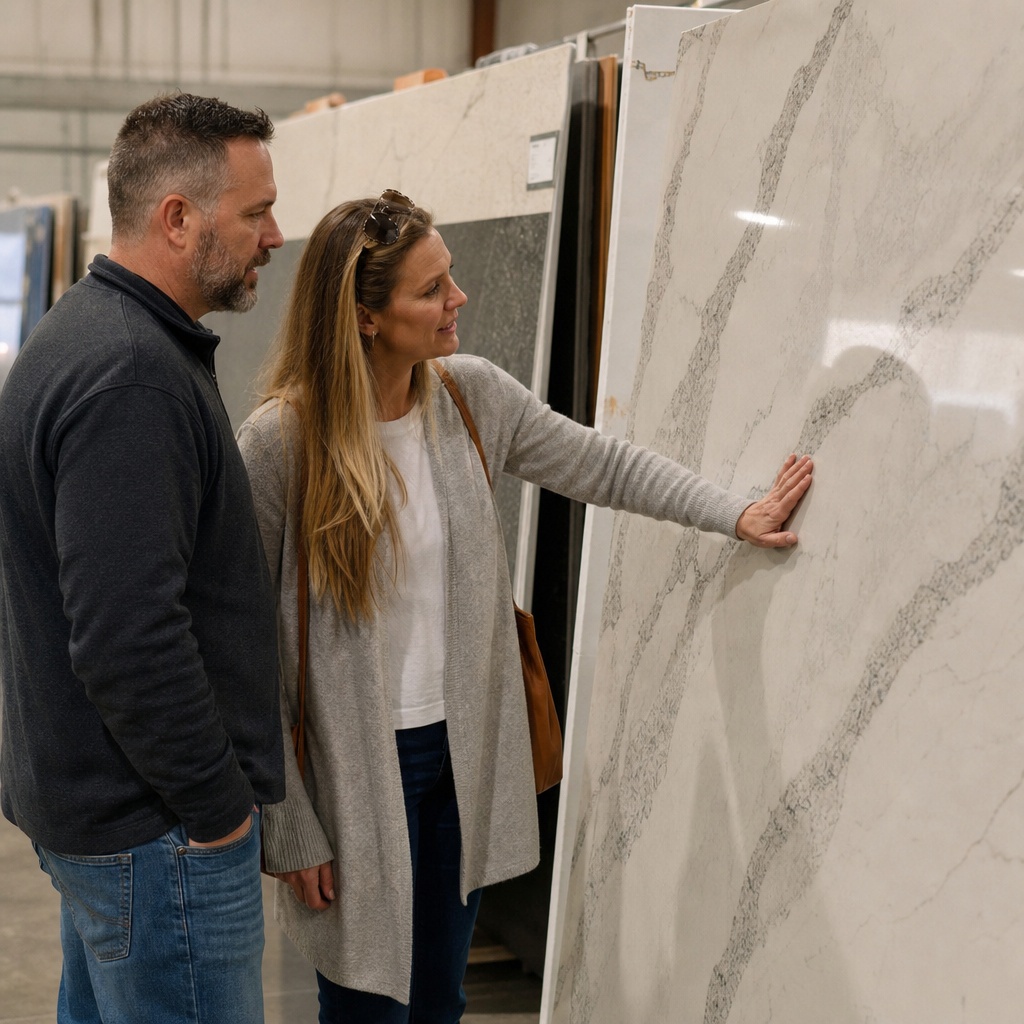
    Start by visiting a showroom with actual material samples rather than relying solely on online images. Colors, textures, and finishes look different in person, and seeing full slabs helps you understand the scale of the pattern and variation you’ll actually live with.

    Bring your kitchen or bathroom measurements and any design inspiration images. A good showroom consultant will help you narrow down options based on your lifestyle, budget tier, and design preferences. Ask specifically about maintenance requirements for each material you’re considering.

    • Visit at least two showrooms to compare material quality and pricing structures
    • Request samples to take home and test against your cabinetry and flooring
    • Get written quotes from at least two fabricators for your specific project
    • Confirm lead times, installation process, and aftercare instructions in writing
    • Ask about edge profile options and their impact on both aesthetics and cleaning ease

    Once you’ve selected your material and fabricator, confirm the installation timeline and prepare your kitchen or bathroom accordingly. Clear the space completely, protect adjacent surfaces, and plan for a period without access to your countertops during installation.

    Conclusion

    The best low maintenance countertop material is ultimately the one that fits your specific lifestyle, usage patterns, and budget — not simply the one with the most impressive specifications on paper. Quartz leads the field for most homeowners because it combines non-porous stain resistance, scratch durability, and zero sealing requirements in a single package. Porcelain and sintered stone are the right choice for serious cooks who need genuine heat resistance. Solid surface wins for repairability and seamless design. Laminate remains a smart, practical choice for budget-focused projects.

    Understanding what drives maintenance requirements — porosity, surface hardness, heat sensitivity, and edge design — gives you the tools to evaluate any material confidently. The goal is a countertop that works hard every day without demanding the same from you.

    FAQ

    Which countertop material requires the least daily cleaning and special care?

    Quartz and porcelain require the least daily cleaning and no special care whatsoever. Both are non-porous, meaning spills don’t penetrate the surface. A damp cloth with mild dish soap handles virtually any mess. Neither material requires sealing, polishing, or specialty cleaning products at any point in their lifespan.

    Is quartz really more low maintenance than natural stone like granite?

    Yes, quartz is genuinely lower maintenance than granite for most homeowners. The key difference is porosity. Granite is a natural stone with varying porosity levels that requires periodic sealing to maintain stain resistance. Quartz is engineered to be non-porous and never needs sealing. Both are durable and scratch-resistant, but quartz removes the ongoing sealing obligation entirely, making it the simpler long-term choice.

    What should I ask my fabricator or installer to ensure easy long-term maintenance?

    Ask your fabricator these specific questions before committing to any material or installation:

    • Does this material require sealing, and if so, how often?
    • What cleaning products are safe to use, and which should be avoided?
    • How should I handle chips, scratches, or stains if they occur?
    • What edge profile do you recommend for easiest cleaning in my kitchen layout?
    • Does the manufacturer warranty cover staining or surface damage?
    • Are there any installation details — like seam placement — that affect long-term maintenance?

    Getting clear written answers to these questions before installation ensures you know exactly what your countertop needs to stay in top condition for years to come.
  • Best Countertop Material for a Busy Kitchen

    Best Countertop Material for a Busy Kitchen

    Choosing the right countertop for a kitchen that sees constant action is one of the most practical decisions you’ll make during a remodel or new build. You need a surface that can handle hot pots, sharp knives, spilled sauces, and the general chaos of daily cooking without falling apart or demanding constant attention. The wrong choice means years of frustration, extra maintenance costs, and a surface that looks worn long before its time.

    The good news is that the countertop market has never offered more genuinely useful options. From engineered quartz to natural granite, solid surface to butcher block, each material brings a distinct set of strengths and trade-offs. Understanding those differences clearly helps you spend your money wisely and end up with a kitchen that actually works for your household.

    This guide breaks down the top materials by performance, cost, maintenance, and real-world usability. Whether you cook every night or run a household full of kids and activity, you’ll find clear, honest information here to help you make a confident choice.

    Top Countertop Contenders for a Busy Kitchen

    Before getting into detailed performance comparisons, it helps to see how the main materials stack up at a glance. The table below summarizes the key characteristics of each major option.

    Material Durability Maintenance Relative Cost Best For
    Quartz Excellent Very Low Premium High-traffic kitchens
    Granite Excellent Moderate Mid to premium Natural stone lovers
    Solid Surface Good Low Mid range Seamless, repairable surfaces
    Butcher Block Moderate Moderate Entry to mid Food prep zones
    Laminate Moderate Low Entry level Budget-conscious kitchens

    Quartz: Low-Maintenance Workhorse

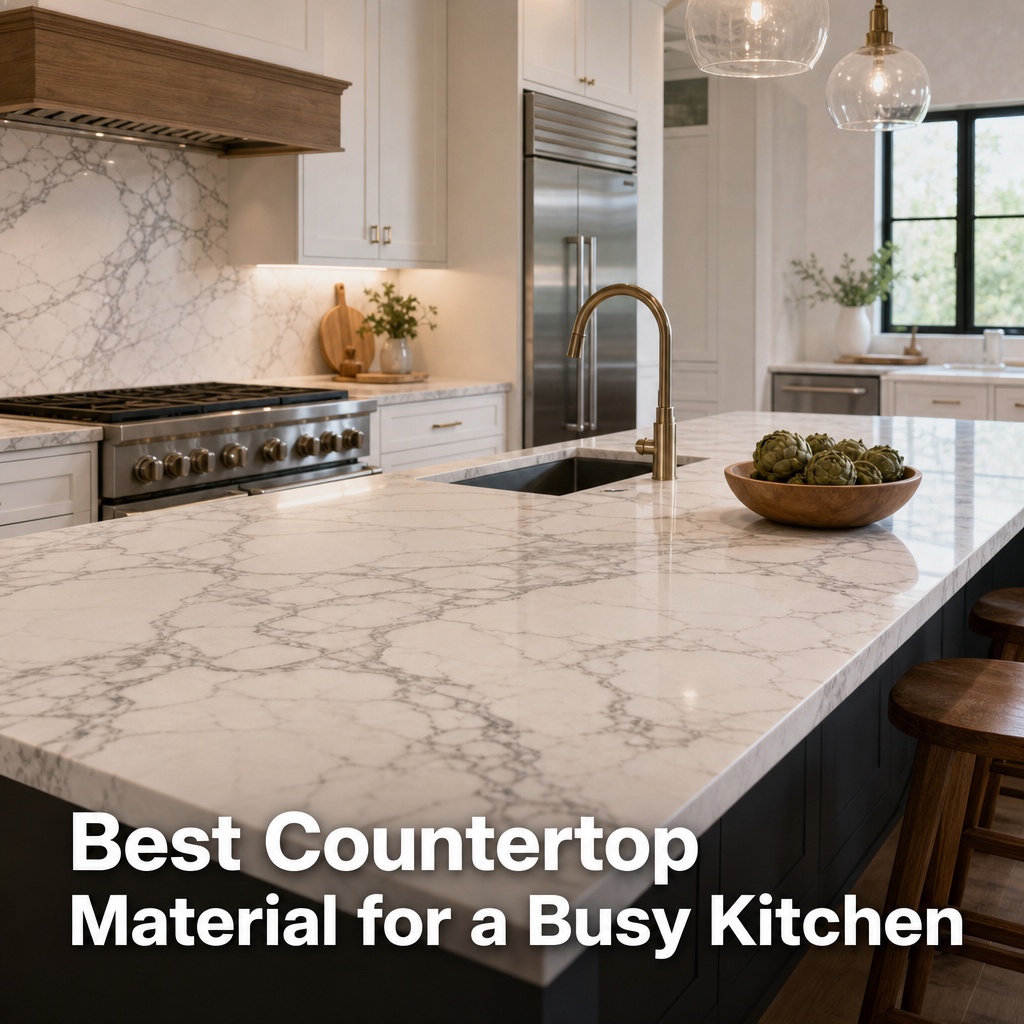
    Quartz countertops are engineered from crushed natural quartz crystals bound with resin, making them non-porous and highly resistant to stains, scratches, and bacteria. This is the top pick for most busy households because it requires virtually no sealing and cleans up with just soap and water. Color options are extensive, and the surface is consistent throughout, unlike natural stone.

    The main limitation is heat resistance. Quartz can discolor or crack if very hot pans are placed directly on it, so trivets are a must. It also tends to cost more than laminate or solid surface, but the long-term durability justifies the investment for most kitchens.

    Granite: Natural Stone Classic

    Granite remains one of the most popular choices for kitchen remodels because of its natural beauty and impressive durability. Each slab is unique, offering patterns and color variations that no engineered material can fully replicate. It handles heat well and resists scratches effectively under normal cooking conditions.

    The trade-off is maintenance. Granite is porous and requires sealing at least once a year to prevent staining and maintain hygiene. Without proper sealing, liquids like red wine, oil, and coffee can penetrate the surface and leave permanent marks. For a busy kitchen, that annual maintenance commitment is worth factoring into your decision.

    Solid Surface: Seamless and Repairable

    Solid surface materials, such as Corian, are made from acrylic or polyester resins mixed with mineral fillers. They create a smooth, seamless appearance because the sink can be integrated directly into the countertop with no visible joints. Scratches and minor damage can be sanded out, which is a significant advantage in a high-use kitchen.

    Solid surface is not as heat resistant as granite or quartz, and it can scratch more easily under heavy use. However, the repairability factor makes it a practical long-term choice for families who want a surface that can be refreshed rather than replaced.

    Butcher Block: Warm and Functional

    Butcher block countertops bring warmth and a natural feel to any kitchen. They are ideal for dedicated food preparation zones because the wood surface is gentle on knife blades and provides a comfortable working height. Many professional cooks appreciate the tactile quality of wood during meal prep.

    The downside is that wood requires regular oiling to prevent drying, cracking, and warping. It is also vulnerable to water damage if not properly sealed around the sink area. Butcher block works best as a partial countertop solution rather than covering the entire kitchen surface.

    Laminate: Budget-Friendly Option

    Laminate has come a long way from its dated reputation. Modern laminate countertops convincingly mimic the look of granite, marble, and wood at a fraction of the cost. They are easy to clean, resistant to stains, and available in an enormous range of color options and patterns.

    The limitations are real, though. Laminate cannot be repaired once chipped or burned, and the edges can peel over time with heavy use. It is not a premium material, but for a rental property, a secondary kitchen, or a tight budget, it delivers solid everyday performance.

    Key Features and Everyday Performance

    Performance in a busy kitchen comes down to a handful of critical factors. Knowing how each material handles these daily demands helps you avoid costly regrets.

    Durability, Scratch and Heat Resistance

    Durability is the foundation of any good countertop choice. Granite and quartz lead the field here, both offering excellent scratch resistance under normal cooking conditions. Granite handles heat exceptionally well, while quartz needs protection from direct high heat.

    • Granite: Highly scratch resistant, excellent heat resistance
    • Quartz: Excellent scratch resistance, moderate heat resistance
    • Solid Surface: Moderate scratch resistance, low heat resistance
    • Butcher Block: Moderate durability, poor heat resistance
    • Laminate: Moderate scratch resistance, poor heat resistance

    Countertop thickness also plays a role in durability. Thicker slabs, typically 1.25 inches or more, resist cracking and chipping better than thinner profiles, especially around edges and cutouts.

    Stain Resistance and Ease of Cleaning

    Stain resistance is critical in a kitchen where spills happen constantly. Quartz is the clear winner here because its non-porous surface prevents liquids from penetrating. Laminate and solid surface also perform well for stain resistance in daily use.

    Granite requires sealing to achieve comparable stain resistance. Without it, the porous stone absorbs oils and pigmented liquids quickly. Butcher block is the most vulnerable to staining and requires prompt cleanup and regular oiling to maintain hygiene and appearance.

    Hygiene is a related concern. Non-porous surfaces like quartz and solid surface do not harbor bacteria in the same way porous materials can, making them the better choice for households focused on food preparation safety.

    Maintenance Needs and Long-Term Care

    Low maintenance is a priority for most busy households. Quartz and laminate require the least ongoing care, needing only regular wiping with mild soap and water. Solid surface is similarly easy but benefits from occasional light sanding to remove surface scratches.

    • Quartz: Wipe clean, no sealing required
    • Granite: Annual sealing, regular wiping
    • Solid Surface: Wipe clean, occasional sanding for scratches
    • Butcher Block: Monthly oiling, prompt drying required
    • Laminate: Wipe clean, avoid abrasive cleaners

    Sealing granite properly is the single most important maintenance task for keeping it looking good and performing well over the long term. Skipping this step leads to staining and surface degradation that is difficult to reverse.

    Appearance, Style Options and Fit with Decor

    Aesthetics matter because you live with your countertop every day. Granite offers unmatched natural beauty with unique veining and depth that engineered materials cannot fully replicate. Marble delivers a similar visual impact but is far more demanding in terms of maintenance and is generally not recommended for busy kitchens.

    Quartz offers the widest range of consistent color options, making it easy to match any kitchen decor. Edge profiles, from simple eased edges to elaborate ogee designs, are available across most materials and add a custom look. Butcher block adds warmth and texture that works beautifully in farmhouse or transitional kitchen styles.

    Pricing, Value and Installation Considerations

    Cost is always part of the equation. Understanding what you get at each price point helps you make a smarter investment.

    What Actually Drives Countertop Cost

    Featured image

    Material is only one line on the quote, and it is rarely the line that moves the total the most. Two kitchens in the same square footage, in the same stone, can land in very different places depending on the fabrication the layout demands. These are the factors that actually set the number:

    • Slab grade and rarity. Within granite and quartzite alone, a common domestic slab and a heavily veined exotic can differ by several times over. This is the single widest variable in a stone quote.
    • How much slab the layout wastes. You buy the slab, not the finished square footage. An awkward layout, a large island, or veining you want matched across pieces can mean paying for stone that ends up as offcuts.
    • Thickness. Three centimeter stone costs more than two centimeter and usually needs no build up at the edge, which changes both the price and the look.
    • Edge profile. An eased or straight edge is standard. Ogee, mitered and built up edges add fabrication time to every linear foot.
    • Cutouts and finishing. Undermount sinks, cooktops, faucet holes and polished exposed sides are each fabrication steps, not free inclusions.
    • Waterfall panels and matched backsplashes. Beautiful, and they consume slab and shop time well beyond the counter itself.
    • Seams and access. Where seams have to fall, and how hard the pieces are to carry in, both affect the labor side.
    • Removal and disposal of the old tops. Straightforward, but real, and worth confirming is included before you compare two quotes.

    In relative terms the order is fairly predictable. Laminate sits at the bottom, butcher block and solid surface land in the middle, quartz sits at the premium end with a fairly tight spread because it is engineered to a consistent product, and granite has the widest range of all because a plain slab and a rare one are not the same purchase at all.

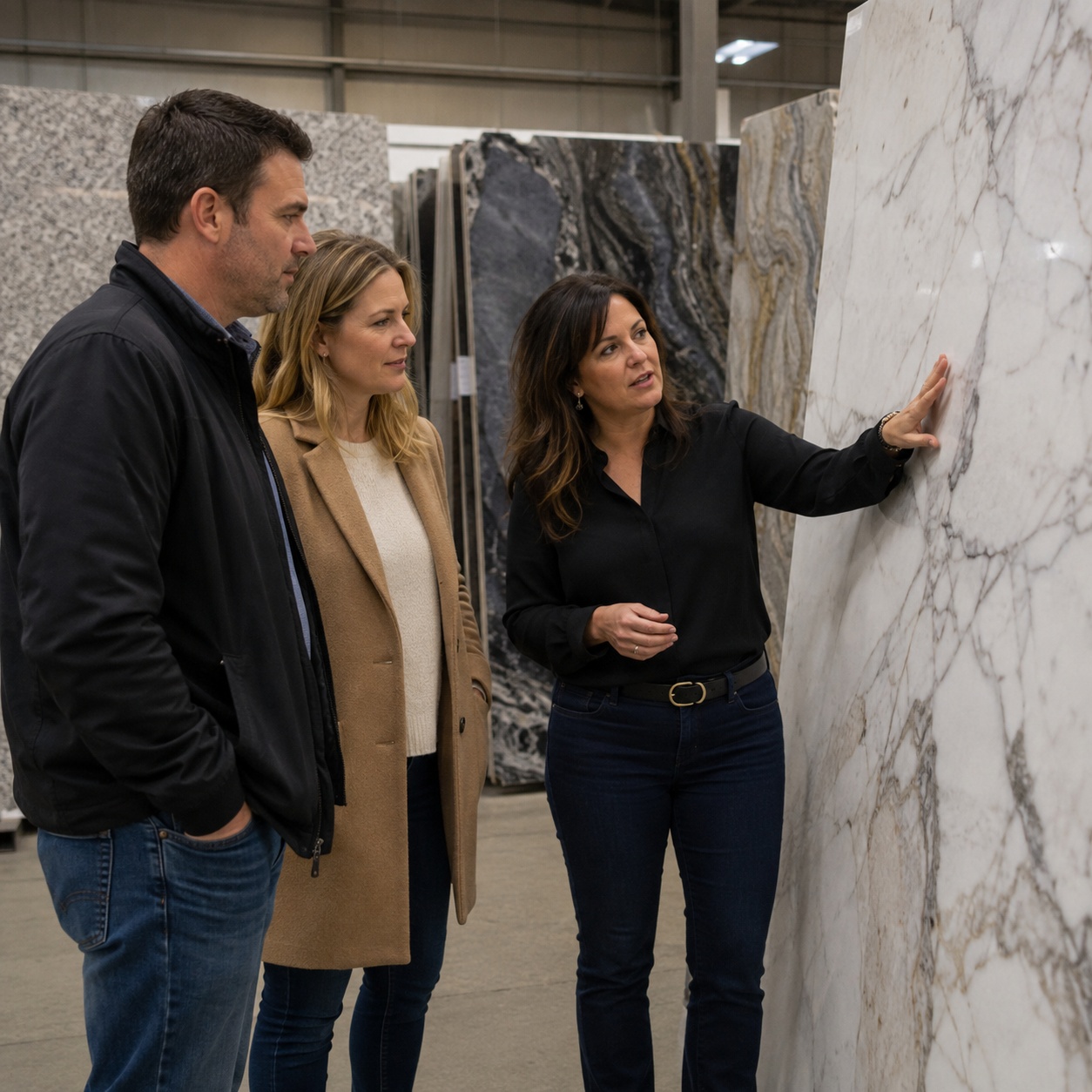
    Any single number published online is wrong for most real kitchens in one direction or the other, which is why we quote from your actual layout instead. Bring your measurements, or just your rough dimensions, to the showroom on the Black Horse Pike and we will walk the slabs with you and put a written number against the kitchen you are actually building. There is no charge for the quote.

    Soapstone and porcelain tile fall in the mid-range, typically between solid surface and quartz in terms of installed cost. Concrete countertops can vary widely depending on whether they are poured in place or prefabricated.

    Installation Complexity and Lead Times

    Countertop installation complexity affects both cost and timeline. Laminate is the easiest to install and can often be done as a DIY project. Solid surface requires professional installation for seamless results, but the process is relatively straightforward.

    Granite and quartz require professional templating, cutting, and installation because of their weight and the precision required for cutouts. Lead times for custom stone countertops can range from one to three weeks depending on supplier availability and fabrication schedules. Planning ahead is essential for any kitchen remodel involving stone.

    Value for Money in a High-Traffic Kitchen

    Resale value is a real consideration if you plan to sell your home eventually. Granite and quartz consistently rank among the top countertop materials for boosting kitchen appeal and resale value. Buyers recognize quality stone surfaces and often factor them into their offers.

    Laminate, while practical and affordable, does not add the same perceived value. However, if your budget is limited, a well-installed laminate countertop is far better than a damaged or outdated stone surface. Prioritize condition and cleanliness over material prestige if funds are tight.

    User Experience in a Busy Household

    Real-world performance often differs from spec sheets. Here is how each material actually holds up under the demands of a genuinely busy kitchen.

    How Each Material Handles Heavy Cooking and Meal Prep

    Granite and quartz handle the demands of serious cooking well. Both surfaces tolerate the weight of heavy equipment, resist scratches from utensils, and clean up quickly after messy food preparation sessions. Quartz edges out granite slightly for everyday convenience because there is no sealing requirement.

    Butcher block shines specifically for food preparation tasks. Chopping vegetables, rolling dough, and working with raw ingredients all feel more natural on a wood surface. Many cooks install butcher block in one section of the kitchen specifically for this purpose while using quartz or granite elsewhere.

    Solid surface handles moderate cooking demands well but shows wear more quickly under heavy use. It is better suited to kitchens with moderate rather than intense daily cooking activity.

    Family-Friendly: Kids, Messes and Daily Cleanup

    Families with children need a surface that forgives messes and cleans up fast. Quartz is the top performer here because spills wipe away without staining, and the surface does not require any special cleaning products. Solid surface is similarly forgiving and has the added benefit of being repairable if a child manages to scratch or chip it.

    • Quartz: Excellent for families, stain-proof and easy to clean
    • Solid Surface: Good for families, repairable surface
    • Laminate: Decent for families, avoid harsh scrubbing
    • Granite: Good with proper sealing, requires more care
    • Butcher Block: Challenging for families, needs frequent maintenance

    Eco-friendly materials are increasingly available in the solid surface and quartz categories, with some manufacturers offering products made from recycled content for households focused on sustainability.

    Noise, Feel and Comfort During Use

    The tactile experience of a countertop matters more than most people realize until they spend hours cooking on it. Hard stone surfaces like granite and quartz can be tiring on wrists and arms during extended food preparation. Butcher block and solid surface offer a slightly softer feel that reduces fatigue.

    Noise is another factor. Dropping items on granite or quartz produces a sharp sound, while wood and solid surface absorb impact more quietly. In open-plan kitchens where the cooking area connects to living spaces, this can be a meaningful consideration for daily comfort.

    Alternatives and Buying Advice

    Beyond the main five materials, several alternatives deserve consideration depending on your specific needs and kitchen style.

    Other Options: Concrete, Porcelain and Stainless Steel

    Concrete countertops offer a distinctive industrial aesthetic and can be customized in shape, color, and texture. They are durable but require sealing and can crack over time if not properly reinforced. The cost is comparable to mid-range quartz when professionally installed.

    Porcelain tile countertops are highly heat resistant and available in a wide range of designs, including options that convincingly mimic marble. The grout lines, however, require regular cleaning and can harbor bacteria if not maintained. Large-format porcelain slabs eliminate the grout issue and are gaining popularity as a premium alternative.

    Stainless steel countertops are the professional kitchen standard for good reason. They are hygienic, heat resistant, and extremely durable. The drawbacks are noise, visible scratches over time, and a cold, industrial look that does not suit every home kitchen aesthetic.

    How to Match Countertop Choice to Your Lifestyle

    The right countertop depends on how you actually use your kitchen, not just how you want it to look. Consider these factors honestly before making a decision:

    • How often do you cook from scratch each week?
    • Do you have children or pets that create frequent messes?
    • Are you willing to commit to annual sealing or monthly oiling?
    • Is resale value a priority for your home?
    • What is your realistic budget for materials and installation?

    A household that cooks intensively every day benefits most from quartz or granite. A household that uses the kitchen lightly and prioritizes budget will find laminate or solid surface perfectly adequate. Matching material to lifestyle prevents overspending on features you do not need or underspending on durability you will regret losing.

    Questions to Ask Suppliers and Installers

    Before committing to any countertop material, ask your supplier and installer the right questions to avoid surprises. Good information upfront saves money and frustration later.

    • What is the countertop thickness available, and does it affect pricing?
    • What edge profiles are included in the base price?
    • How long is the lead time from templating to installation?
    • What warranty is offered on materials and workmanship?
    • Are eco-friendly or recycled content options available?
    • What sealing products do you recommend, and how often is sealing needed?
    • Can I see samples in my actual kitchen lighting before ordering?

    Never skip the step of viewing samples in your own kitchen. Lighting dramatically affects how colors and patterns appear, and what looks perfect in a showroom can look completely different at home.

    Conclusion

    Quartz stands out as the most practical all-around choice for a busy kitchen, combining durability, stain resistance, low maintenance, and a wide range of color options. Granite is an excellent alternative for those who love natural stone and are willing to commit to annual sealing. Solid surface offers unique repairability that makes it a smart long-term investment for active households.

    Butcher block adds warmth and function as a dedicated food preparation surface, while laminate delivers reliable everyday performance at the lowest cost. The best material is ultimately the one that fits your cooking habits, household demands, and budget without requiring more upkeep than you are realistically willing to provide.

    FAQ

    What is the most durable countertop material for a busy kitchen?

    Quartz and granite are the most durable options for high-traffic kitchens. Both offer excellent scratch resistance and long-term performance. Quartz has a slight edge for everyday practicality because it requires no sealing and resists stains without any special treatment. Granite is equally durable but needs annual sealing to maintain its resistance to staining and to preserve hygiene over time.

    Which countertop is easiest to keep clean and stain free?

    Quartz is the easiest countertop to keep clean and stain free because its non-porous surface prevents liquids from penetrating. A simple wipe with soap and water handles most messes. Solid surface and laminate are also easy to clean in daily use. Granite requires proper sealing to achieve comparable stain resistance, and butcher block demands the most attention to maintain cleanliness and prevent moisture damage.

    How should I prioritize budget versus performance when choosing a countertop?

    Start by identifying the minimum performance level your kitchen actually needs. If you cook heavily every day, investing in quartz or granite pays off through durability and reduced maintenance costs over time. If your kitchen sees lighter use or you are working with a tight budget, solid surface or laminate delivers solid performance at a lower price point. Avoid spending on premium materials if your lifestyle does not demand them, and avoid cutting costs so deeply that you end up replacing the countertop within a few years.