Author: ryeadmin

  • How Long Do Quartz Countertops Last? Facts to Know

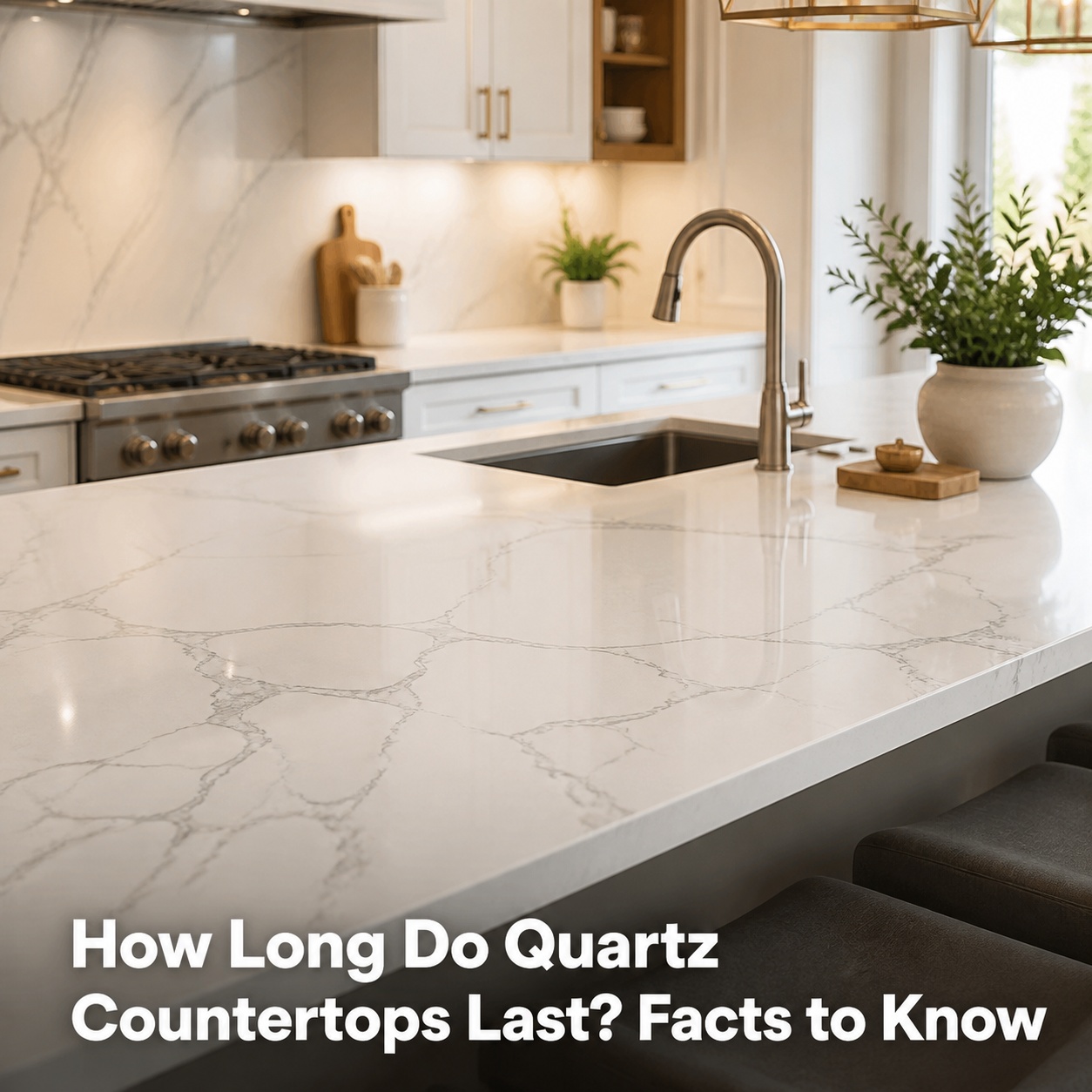
    How Long Do Quartz Countertops Last? Facts to Know

    Quartz countertops have become one of the most popular choices for kitchens and bathrooms, and for good reason. They look polished, hold up well under daily use, and require far less upkeep than many natural stone options. But before committing to this material, most homeowners want to know one thing: how long will it actually last?

    The honest answer is that quartz countertops can last a lifetime when properly installed and cared for. That said, lifespan is not just about the material itself. It depends on how the surface is used, how it is cleaned, and whether small problems are addressed before they grow into bigger ones.

    This guide covers everything you need to know about the durability of quartz countertops, what shortens their lifespan, and how to get the most out of your investment. If you are comparing materials or planning a kitchen renovation, the information here will help you make a confident, well-informed decision.

    How Long Quartz Countertops Typically Last

    Average Lifespan and What “Long-Lasting” Means

    Quartz countertops are built to last. Under normal household conditions, they routinely hold up for decades without significant degradation. Many manufacturers back their products with a lifetime warranty, which signals just how confident they are in the material’s longevity.

    The lifespan of quartz countertops is not a fixed number. It is a range shaped by how the surface is treated. A well-maintained countertop in a low-traffic home will outlast a neglected one in a busy kitchen by many years.

    Here is a quick comparison of expected lifespans across common countertop materials:

    Material Expected Lifespan Requires Sealing Warranty Typical
    Quartz Lifetime with care No Lifetime (varies by brand)
    Granite Decades with sealing Yes Limited
    Marble Long but high maintenance Yes Limited
    Laminate Shorter term No Short-term

    Resale value also benefits from a long-lasting countertop. Buyers notice quality surfaces, and quartz consistently ranks among the top materials for adding perceived value to a home.

    What Quartz Is and Why It Affects Durability

    Quartz countertops are not made from a single slab of natural stone. They are engineered stone products, typically composed of roughly ninety percent ground silica and quartz crystals bound together with resin and pigments. Manufacturers have refined this process to produce surfaces that are dense, non-porous, and highly consistent.

    Because the material is engineered, manufacturers can control its properties more precisely than with natural stone. The result is a surface with excellent scratch resistance, strong stain resistance, and reliable durability across the entire slab.

    The resin component is what makes quartz non-porous, which means bacteria and moisture cannot penetrate the surface the way they can with granite or marble. This is a significant advantage in kitchen countertops and bathroom vanities alike.

    Key Factors That Affect Lifespan

    Installation Quality and Sealing at Edges

    Even the best quartz slab can fail prematurely if it is not installed correctly. Poor installation leads to uneven support, which puts stress on the countertop and increases the risk of cracking over time. The edges and seams are especially vulnerable.

    Unlike granite countertops, quartz does not require sealing across the surface. However, the edges and seams where two slabs meet should be finished and joined properly. A gap or poorly bonded seam allows moisture to work its way underneath, which can cause warping of the substrate or damage to the adhesive over time.

    Hiring an experienced installer matters more than most homeowners realize. Most manufacturer warranties also depend on professional installation, so cutting corners here can void your coverage.

    Daily Use, Heat, and Impact Damage

    Quartz handles daily kitchen use well, but it is not indestructible. Heat resistance is one area where quartz has a real limitation. Placing a hot pan directly on the surface can cause thermal shock, which may lead to discoloration or cracking. The resin in engineered stone is more heat-sensitive than the stone itself.

    Impact damage is another concern. Dropping a heavy object on the edge of a quartz countertop can cause chips and cracks, particularly at corners. The edges are the most structurally vulnerable part of any slab.

    UV resistance is also worth noting. Quartz countertops installed near windows or in outdoor kitchens may experience fading over time because the resin does not hold up as well under prolonged sun exposure as natural stone does.

    Cleaning Habits and Product Choices

    Cleaning is one of the most overlooked factors in countertop lifespan. Quartz is low maintenance, but that does not mean anything goes. Harsh chemicals, abrasive scrubbers, and highly acidic or alkaline cleaners can break down the resin over time and dull the surface finish.

    The safest approach is warm water, mild dish soap, and a soft cloth. For tougher messes, a gentle stone cleaner works well. Avoid bleach-based products, oven cleaners, and anything with a very high or very low pH.

    • Use a soft cloth or non-abrasive sponge
    • Stick to pH-neutral or mild cleaning products
    • Wipe up spills promptly, especially oils and pigmented liquids
    • Avoid leaving standing water near seams or edges
    Featured image

    How to Extend the Life of Quartz Countertops

    Routine Care and Safe Cleaning Practices

    Consistent, simple maintenance is the single best thing you can do for your quartz countertops. A quick daily wipe-down prevents buildup that becomes harder to remove over time. Stain resistance is high, but it is not unlimited. Certain substances like wine, coffee and turmeric can leave marks if left to sit.

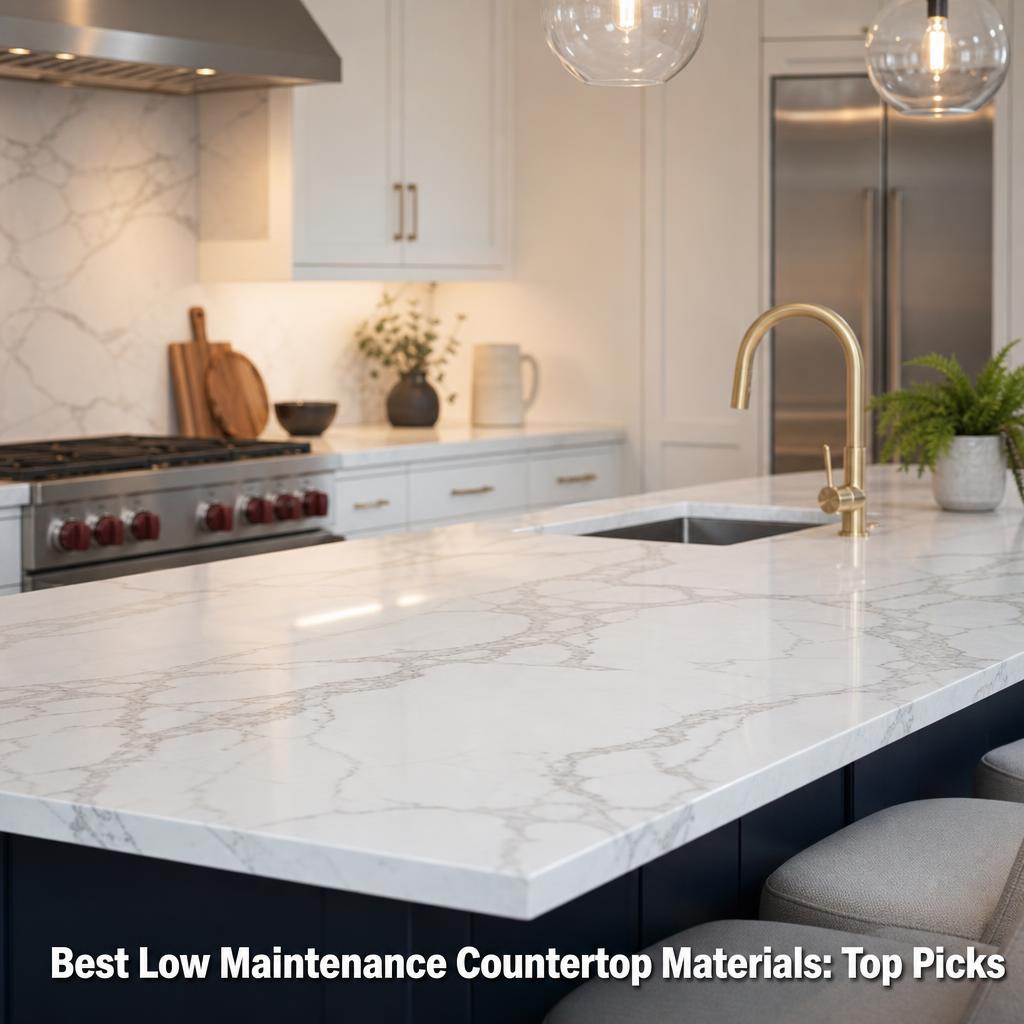
    For homeowners who want a surface that stays beautiful with minimal effort, quartz is one of the best low-maintenance countertop materials available. The non-porous surface means no sealing, no special treatments, and no annual upkeep rituals.

    Routine care also means inspecting seams and edges periodically. Catching a small crack or lifting seam early makes repair far simpler and less costly than waiting until the damage spreads.

    Preventing Chips, Cracks, and Discoloration

    Prevention is straightforward once you know the vulnerabilities. Always use trivets or heat pads under hot cookware. Use a cutting board rather than cutting directly on the surface, even though quartz has good scratch resistance. The surface can handle light contact, but repeated knife use will eventually dull both the blade and the finish.

    • Place trivets under hot pots, pans, and appliances
    • Use cutting boards for all food prep
    • Avoid dropping heavy items near edges and corners
    • Keep countertops out of prolonged direct sunlight when possible
    • Do not use the countertop as a step stool or work platform

    Discoloration from UV exposure is harder to reverse once it happens. If your kitchen or bathroom gets significant sun, consider window treatments or choose a quartz product specifically rated for better UV resistance.

    When Repairs Make Sense Versus Replacement

    Small chips and hairline cracks can often be repaired with a color-matched epoxy or resin filler. The repair will not be invisible up close, but it can restore structural integrity and prevent the damage from spreading. For minor cosmetic issues, repair is almost always the smarter financial choice.

    Countertop replacement makes more sense when damage is widespread, when the substrate beneath has been compromised by moisture, or when the surface has faded or stained beyond what cleaning can address. At that point, the cost of multiple repairs may approach or exceed the cost of a new installation.

    If you are unsure whether repair or replacement is the right call, get a professional assessment. A qualified fabricator can tell you quickly whether the damage is cosmetic or structural.

    Quartz Countertops Compared With Other Materials

    Quartz vs. Granite

    Both quartz and granite countertops are durable, long-lasting, and popular in kitchens. The key difference is that granite is a natural stone that requires periodic sealing to maintain its stain resistance, while quartz is engineered and non-porous from the start.

    Granite has a unique, one-of-a-kind appearance that some homeowners prefer. Quartz offers more consistency in color and pattern, which makes it easier to match across a large kitchen. For a deeper look at how these two materials stack up, the quartz vs. granite comparison breaks down the differences in durability, maintenance, and overall value.

    In terms of lifespan, both materials can last for decades. Granite may require more ongoing maintenance to reach that same longevity.

    Quartz vs. Marble and Budget Surfaces

    Marble is a beautiful natural stone, but it is significantly more porous and softer than quartz. It scratches more easily, stains more readily, and requires consistent sealing and careful maintenance. For high-traffic kitchens, marble demands a level of attention that many homeowners find impractical. If you are weighing the two, the marble vs. quartz breakdown offers a clear side-by-side look at real-world performance.

    Laminate countertops sit at the entry-level tier of the market. They are affordable and come in a wide range of styles, but their lifespan is considerably shorter. Laminate is prone to chipping, swelling near water, and surface wear that quartz simply does not experience.

    Different Priorities: Durability, Maintenance, and Cost

    Choosing a countertop material comes down to what you value most. If durability and low maintenance are the top priorities, quartz is hard to beat. If budget is the primary concern, the entry-level granite and quartz collections are the place to start. If aesthetics and a natural look matter most, granite or marble may be worth the extra upkeep.

    Cost is driven by several factors: the brand, the thickness of the slab, the complexity of the edge profile, the size of the installation, and local labor rates. Premium collections sit at the higher end of the market. Mid-range engineered stone offers similar performance for less. Even entry-level quartz outlasts the budget surfaces it is usually compared against.

    For anyone planning a renovation and weighing material options, getting a written quote based on your actual space is the only way to get an accurate cost picture. Published estimates rarely reflect real project variables.

    Conclusion

    Quartz countertops are one of the most durable and practical surfaces available for kitchens and bathrooms. With proper installation, sensible daily habits, and basic cleaning, they can last a lifetime. The material’s engineered composition gives it advantages over natural stone in consistency, stain resistance, and ease of maintenance.

    The factors that shorten a quartz countertop’s lifespan are largely preventable: heat exposure, harsh cleaners, poor installation, and ignoring small damage before it spreads. Address those issues, and your countertop will stay in excellent condition for decades.

    If you are still deciding on the right material for your space, consider how the surface will actually be used day to day. Quartz performs exceptionally well in busy households and is a strong choice for anyone who wants beauty without high maintenance demands.

    FAQ

    Do quartz countertops last longer than granite?

    Both materials are highly durable and can last for decades. Quartz has an advantage in that it does not require sealing, which reduces the maintenance burden and the risk of staining over time. Granite can match quartz in lifespan, but only with consistent upkeep. For most homeowners, quartz is the lower-effort path to long-term durability.

    What usually causes quartz countertops to wear out?

    The most common causes are heat damage from placing hot items directly on the surface, chemical damage from harsh cleaning products, UV fading near windows, and physical impact that chips edges or corners. Poor installation can also shorten lifespan significantly by creating stress points in the slab. Most of these causes are preventable with basic care.

    Can quartz countertops be repaired if they chip or crack?

    Yes, minor chips and cracks can be repaired using color-matched epoxy or resin filler. The repair is rarely completely invisible, but it restores the surface and prevents further damage. Larger cracks or widespread damage may indicate that countertop replacement is the more practical solution. A professional fabricator can assess the damage and recommend the best course of action.
  • Are Marble Countertops Worth It? Honest Answer

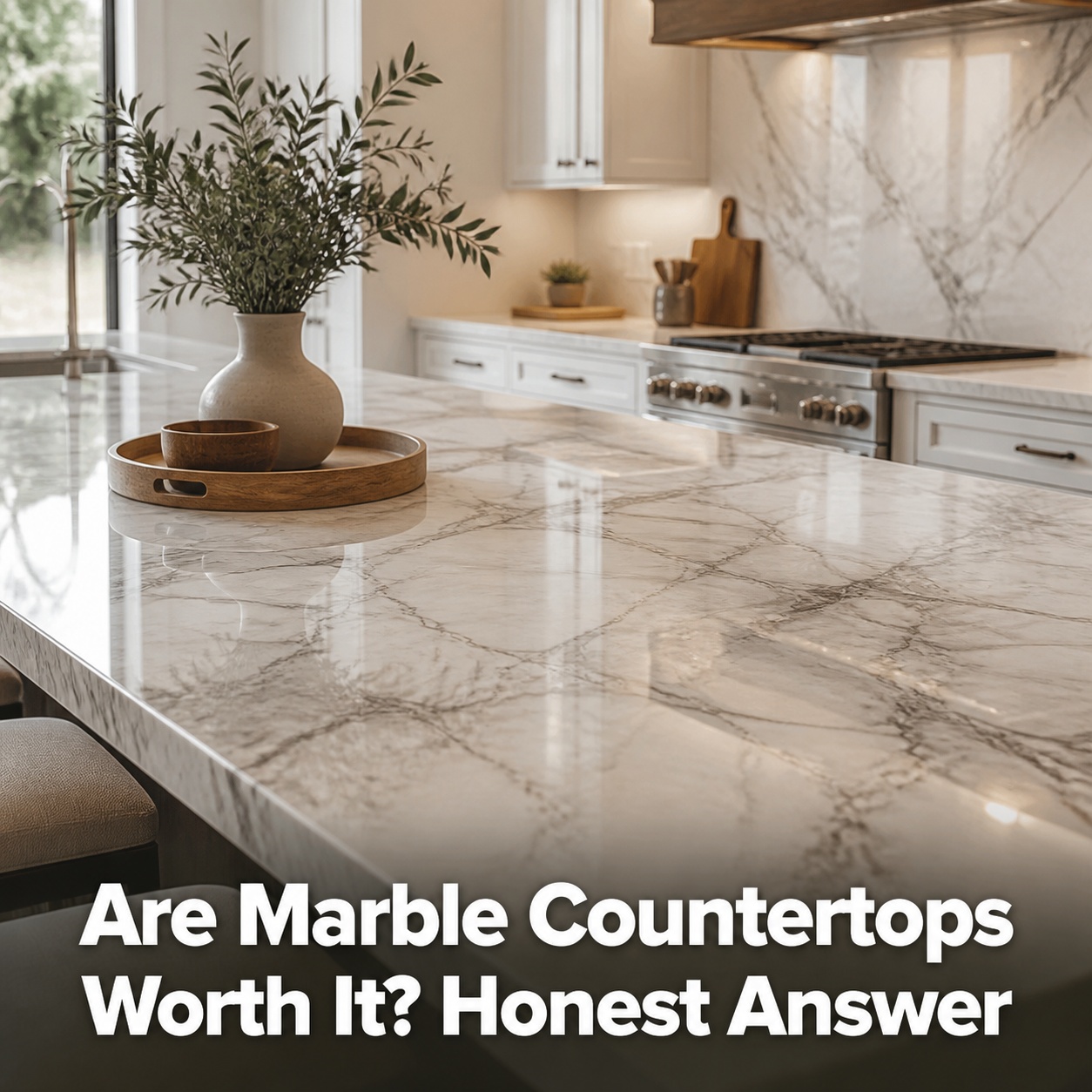
    Are Marble Countertops Worth It? Honest Answer

    Marble has a way of stopping people in their tracks. Whether it’s a sweeping kitchen island or a sleek bathroom vanity, the look of natural marble is hard to replicate and even harder to ignore. That visual pull is exactly why so many homeowners find themselves seriously considering it during a kitchen remodel or bathroom upgrade.

    But the honest conversation about marble countertops goes well beyond how they look. There are real trade-offs involved, and the decision deserves more than surface-level enthusiasm. This article breaks down everything you need to know, from the material itself to the maintenance realities, so you can make a genuinely informed choice.

    The short answer to whether marble countertops are worth it depends entirely on your lifestyle, your priorities, and how you define value. For some homeowners, marble is a dream come true. For others, it becomes a source of daily frustration. Let’s get into the details.

    Understanding Marble Countertops

    What Marble Is And How It Differs From Other Stones

    Marble is a natural stone formed when limestone undergoes intense heat and pressure deep within the earth. That metamorphic process creates the distinctive veining and crystalline structure that makes marble so visually striking compared to other countertop materials.

    Unlike granite countertops, which are igneous rocks with tightly interlocked minerals, marble is softer and more porous. This difference in composition is what makes marble both beautiful and more vulnerable to damage in everyday use.

    Quartz countertops, by contrast, are engineered from crushed stone and resin, making them non-porous and more uniform. Marble sits in a different category entirely. It’s a living, reactive surface that changes over time.

    Material Porosity Hardness Maintenance Level
    Marble High Medium High
    Granite Low-Medium High Medium
    Quartz Very Low High Low
    Porcelain Very Low Very High Low
    Laminate Low Low Low

    Common Types Of Marble Used In Kitchens And Bathrooms

    Carrara marble is the most widely used variety in residential projects. It features a soft white or grey background with subtle, feathery veining that works well in both traditional and contemporary spaces.

    Calacatta marble is rarer and more dramatic, with bolder, thicker veining on a brighter white base. It’s considered a premium option and is often used in high-end kitchen and bathroom countertop applications.

    Other popular varieties include Statuario, Emperador, and Nero Marquina. Each has a distinct look, and your choice of marble type will significantly affect both the aesthetic outcome and the countertop cost.

    How Marble Countertops Are Installed And Finished

    Installation begins with a professional stone fabricator measuring your space and cutting slabs to fit. The precision required here is significant. Marble is heavy, brittle during cutting, and unforgiving of measurement errors.

    Finishing options include polished, honed, and leathered surfaces. Polished marble has a glossy, reflective finish that shows etching more visibly, while honed marble has a matte look that hides surface damage better.

    Sealing marble is typically done at installation and needs to be repeated periodically. A good fabricator will walk you through the sealing schedule and finishing options before the slabs are cut.

    Benefits Of Choosing Marble Countertops

    Aesthetic Appeal And Design Versatility

    No engineered material fully replicates the depth and movement of natural marble. The veining is unique to each slab, which means your countertop is genuinely one of a kind.

    Marble works across a wide range of design styles. It suits classic white kitchens, moody dark interiors, minimalist bathrooms, and ornate traditional spaces equally well.

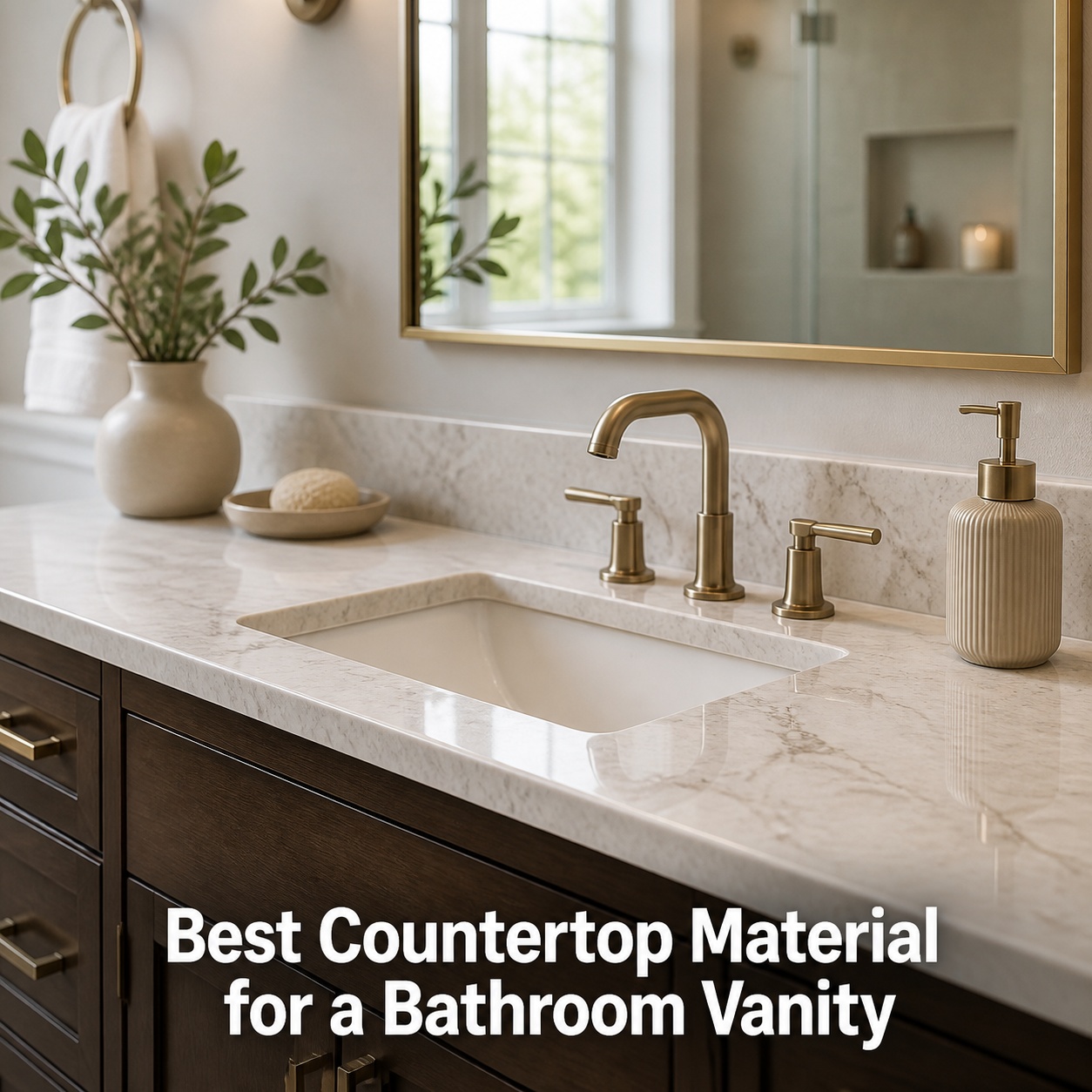
    For bathroom countertops specifically, marble adds a spa-like quality that’s difficult to achieve with other materials. If you’re weighing your options for a vanity, it’s worth reading about the best countertop material for a bathroom vanity to see how marble stacks up against alternatives in that specific context.

    Heat Resistance And Performance In Daily Use

    Marble has solid heat resistance, which is one reason it’s been used in kitchens for centuries. You can set a warm pan on it without the surface scorching or discoloring the way laminate countertops might.

    That said, thermal shock from extremely hot cookware can still cause cracking over time. Using trivets is still a smart habit, even with a heat-resistant natural stone surface.

    Marble’s naturally cool temperature is a genuine advantage for bakers. Pastry dough, chocolate work, and other temperature-sensitive tasks benefit from a surface that stays cool without refrigeration.

    Impact On Home Value And Buyer Perception

    Marble countertops carry a strong perception of luxury among buyers. In higher-end markets, they can contribute positively to resale value and help a home stand out during showings.

    The impact on home value isn’t guaranteed, though. In mid-range markets, buyers may actually be concerned about the maintenance requirements rather than impressed by the material.

    If resale value is a primary driver for your countertop decision, it’s worth exploring which countertop materials perform best for resale before committing to marble specifically.

    Drawbacks, Risks, And Maintenance Realities

    Staining, Etching, And Scratching Issues

    Etching is the most misunderstood issue with marble. It’s not a stain, it’s a chemical reaction between the stone’s calcium carbonate and acidic substances like lemon juice, vinegar, wine, or tomato sauce.

    Featured image

    Etching leaves dull marks on the surface that can’t be wiped away. On polished marble, these marks are highly visible. On honed marble, they’re less obvious but still present.

    Staining is a separate issue caused by liquids absorbing into the porous stone. Oils, coffee, and red wine are common culprits. Regular sealing reduces staining risk but doesn’t eliminate it entirely.

    Cleaning, Sealing, And Long-Term Care Requirements

    Marble cleaning requires pH-neutral products specifically formulated for natural stone. Standard kitchen cleaners, bleach, and anything acidic will damage the surface over time.

    Sealing marble is not a one-time task. Depending on usage and the specific stone, resealing is needed periodically to maintain protection. Some homeowners find this manageable; others find it genuinely burdensome.

    • Use only stone-safe, pH-neutral cleaners daily
    • Wipe spills immediately, especially acidic liquids
    • Reseal the surface on a regular schedule
    • Use cutting boards and trivets consistently
    • Avoid dragging heavy or sharp objects across the surface

    Costs, Hidden Expenses, And Budget Considerations

    Marble countertop cost is driven by several factors: the type of marble selected, slab thickness, edge profile complexity, cutouts for sinks and appliances, and your geographic location.

    Carrara marble sits at the more accessible end of the natural stone spectrum. Calacatta and other rare varieties move into premium territory and can cost significantly more than even high-end granite countertops.

    Hidden expenses include professional sealing, specialty cleaning products, and potential repairs if etching or chipping occurs. Getting a written quote from a qualified stone fabricator is the only reliable way to understand your actual project cost.

    Are Marble Countertops Worth It For Different Homeowners?

    Marble In Busy Family Kitchens

    A busy family kitchen is arguably the hardest environment for marble to thrive. Kids, cooking, spills, and daily chaos create exactly the conditions that cause etching and staining.

    If your kitchen sees heavy daily use with multiple cooks, acidic foods, and limited time for careful maintenance, marble will likely show wear faster than you’d like. The marble pros and cons shift unfavorably in this context.

    For high-traffic kitchens, it’s worth seriously considering what countertop material actually holds up best in a busy kitchen before making a final decision. Marble durability simply has limits that other materials don’t share.

    Marble For Serious Cooks And Bakers

    Serious bakers often love marble for one specific reason: its naturally cool surface. Rolling pastry dough, tempering chocolate, and working with delicate preparations all benefit from a surface that doesn’t warm up quickly.

    The trade-off is that cooking-focused kitchens also tend to involve acidic ingredients, oils, and frequent spills. A dedicated marble baking section paired with a more durable primary countertop material is a practical compromise many serious cooks choose.

    Marble alternatives like quartzite offer a similar aesthetic with better durability, which is worth considering if you want the look without the full maintenance commitment.

    Marble In Luxury, Rental, And Resale-Focused Properties

    In luxury properties, marble countertops are often expected. They signal quality and craftsmanship in a way that engineered materials don’t quite match, and buyers in that market understand and accept the maintenance requirements.

    Rental properties are a different story. Tenants may not follow the careful maintenance protocols marble requires, leading to damage that becomes the owner’s problem. Most property investors choose more forgiving countertop materials for rentals.

    For resale-focused projects, the calculus depends heavily on your target buyer. Marble can be a strong selling point in the right market and a liability in others. Understanding your buyer profile matters as much as the material itself.

    Conclusion

    Marble countertops are genuinely worth it for the right homeowner in the right setting. They offer unmatched beauty, a cool working surface, and a sense of luxury that holds real appeal in both kitchens and bathrooms.

    The honest trade-off is that marble demands more care than most other countertop materials. Etching, staining, and regular sealing are real considerations, not minor footnotes. If you’re prepared for that reality, marble can be a deeply satisfying long-term choice.

    If low maintenance is a priority, exploring the best low-maintenance countertop options will give you a clearer picture of what alternatives exist. The right countertop material is ultimately the one that fits how you actually live, not just how you want your kitchen to look.

    FAQ

    Can I Prevent Stains And Etching On Marble Countertops?

    You can significantly reduce staining by sealing marble regularly and wiping spills immediately. Etching is harder to prevent entirely because it results from chemical contact, not just absorption. Using cutting boards, avoiding acidic foods directly on the surface, and choosing a honed finish over polished will all help minimize visible damage over time.

    Is Marble A Better Choice Than Quartz Or Granite For My Kitchen?

    It depends on your priorities. Marble offers superior aesthetics and a cool surface but requires more maintenance. Quartz countertops are more durable, non-porous, and easier to care for. Granite countertops fall somewhere in between. For a detailed side-by-side look at how these materials compare, the breakdown of marble vs quartz for kitchen countertops covers the key differences clearly.

    How Long Do Marble Countertops Typically Last With Proper Care?

    Marble is an extremely durable natural stone that can last for decades with proper care. Many historic buildings feature marble surfaces that have held up for centuries. In a residential kitchen or bathroom, well-maintained marble countertops should last the lifetime of the home. The key variables are sealing consistency, cleaning habits, and how carefully the surface is protected from acidic substances and heavy impact.

  • Marble vs Quartz: Which Countertop Wins?

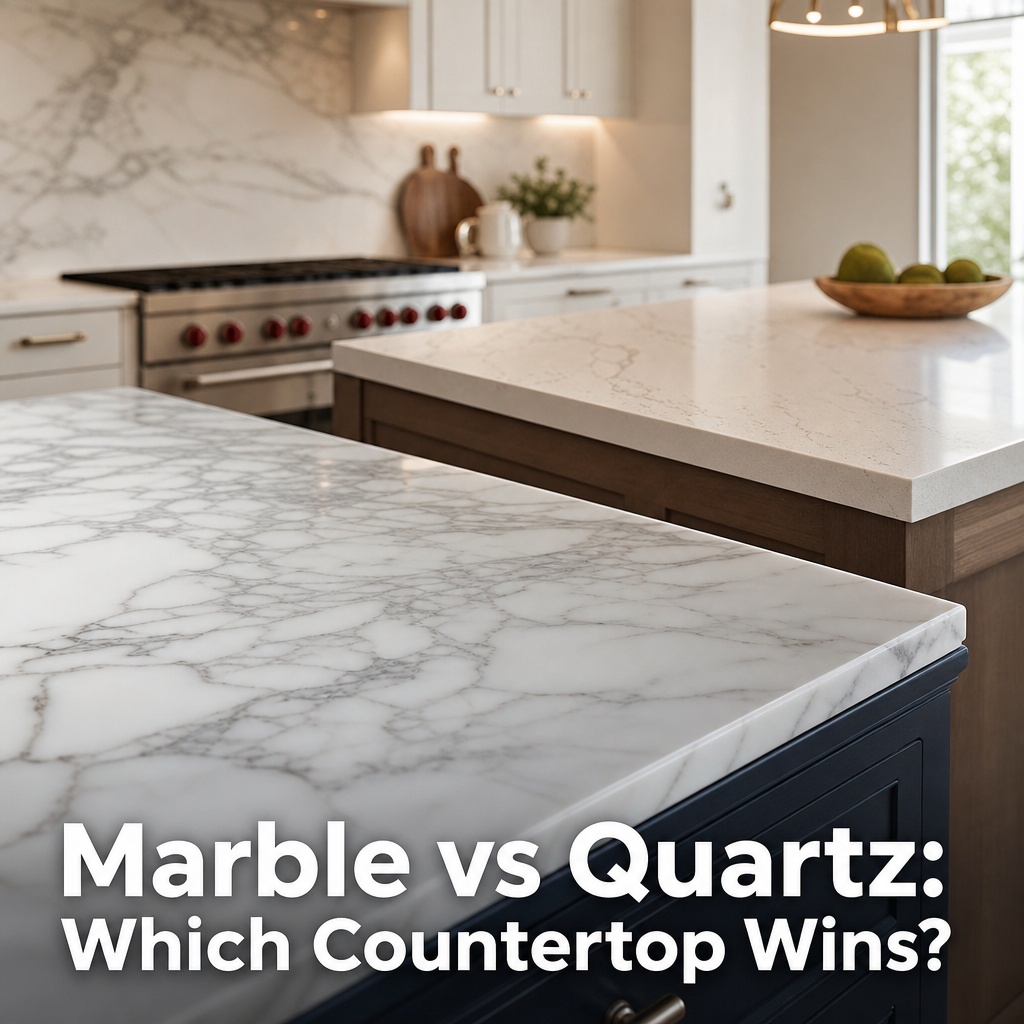
    Marble vs Quartz: Which Countertop Wins?

    Choosing a countertop material is one of the most consequential decisions in any kitchen remodel. The surface you pick will be touched, tested, and judged every single day, by you, your family, and eventually a future buyer walking through your home. Two materials dominate this conversation above all others: marble and quartz.

    Both are beautiful. Both are premium. But they perform very differently under the pressures of real kitchen life. One is a gift from the earth, shaped by heat and pressure over millennia. The other is engineered in a factory to solve the very problems that natural stone creates. Understanding those differences is what separates a satisfying long-term investment from an expensive regret.

    This guide breaks down every meaningful comparison between marble and quartz (aesthetics, durability, maintenance, cost structure, and real-world use cases) so you can make a confident, informed decision for your specific kitchen and lifestyle.

    Overview of Marble and Quartz as Kitchen Countertop Materials

    Before comparing performance, it helps to understand what each material actually is. Their compositions explain almost everything about how they behave in a kitchen environment.

    Feature Marble Quartz
    Composition Natural stone (metamorphic) Engineered stone (93% quartz + resin)
    Porosity High, requires sealing Non-porous, no sealing needed
    Scratch Resistance Moderate High
    Heat Resistance Moderate Moderate (resin can discolor)
    Maintenance Level High Low
    Cost Tier Mid to premium Entry to premium
    Unique Appearance Yes, every slab differs Consistent and uniform

    What Is Marble? Natural Composition, Appearance, and Common Varieties

    Marble is a natural stone formed when limestone undergoes intense heat and pressure deep within the earth. That geological process creates the crystalline structure and distinctive veining patterns that make marble so visually striking. No two slabs are identical, which is part of its enduring appeal.

    Common varieties used in kitchen countertops include Carrara, Calacatta, Statuario, and Emperador. Carrara is the most widely available and tends to sit at the more accessible end of the marble price spectrum. Calacatta and Statuario feature bolder, more dramatic veining and command premium pricing.

    Marble ranges from bright white to soft grey, creamy beige, and deep green or black depending on the mineral content present during formation. Its surface has a natural luminosity that engineered stone has long tried to replicate.

    What Is Quartz? Engineered Composition, Appearance, and Popular Brands

    Quartz countertops are engineered stone products made from roughly ninety-three percent ground natural quartz crystals bound together with polymer resins and pigments. The manufacturing process allows for precise control over color, pattern, and consistency. That consistency is both quartz’s greatest strength and its most debated limitation.

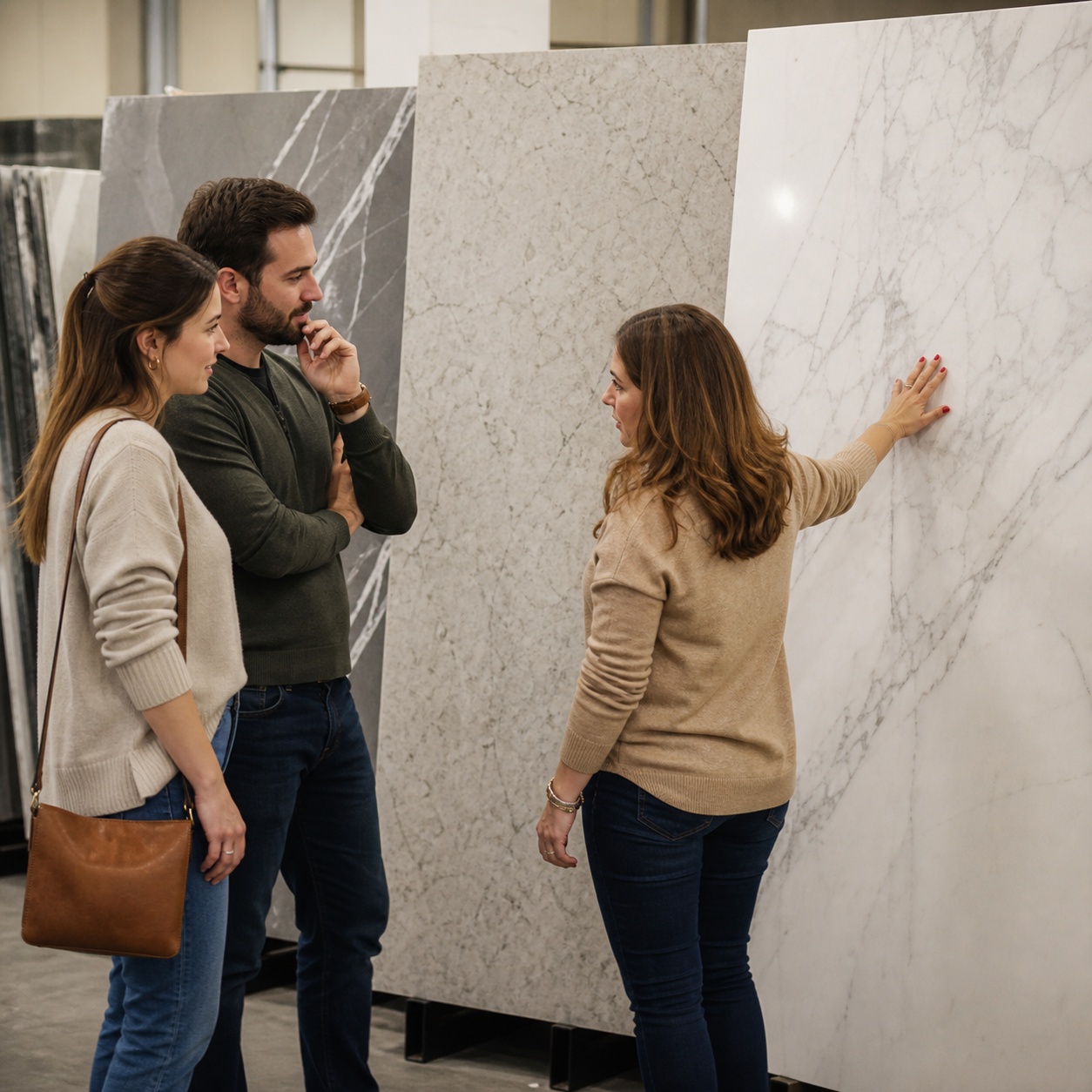
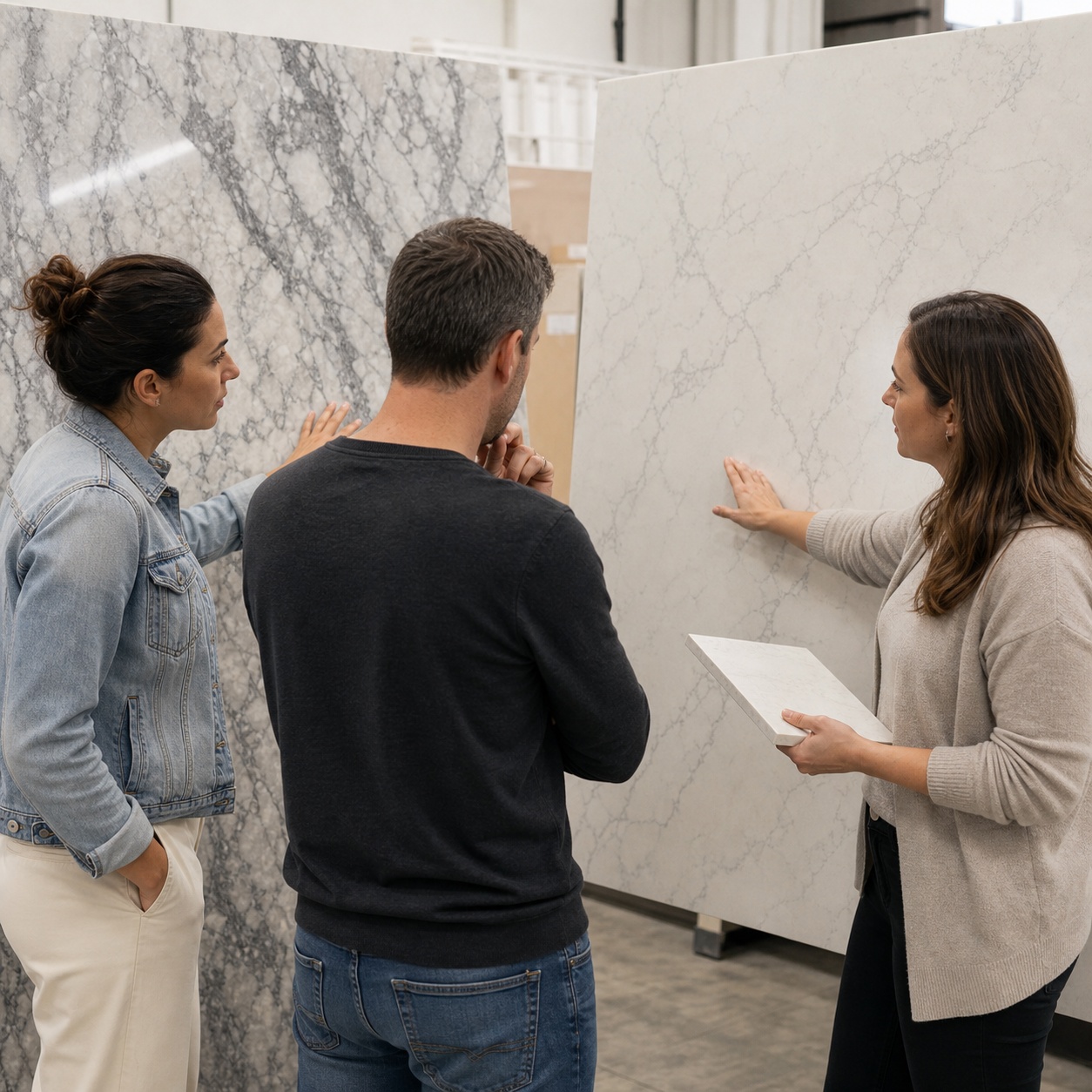
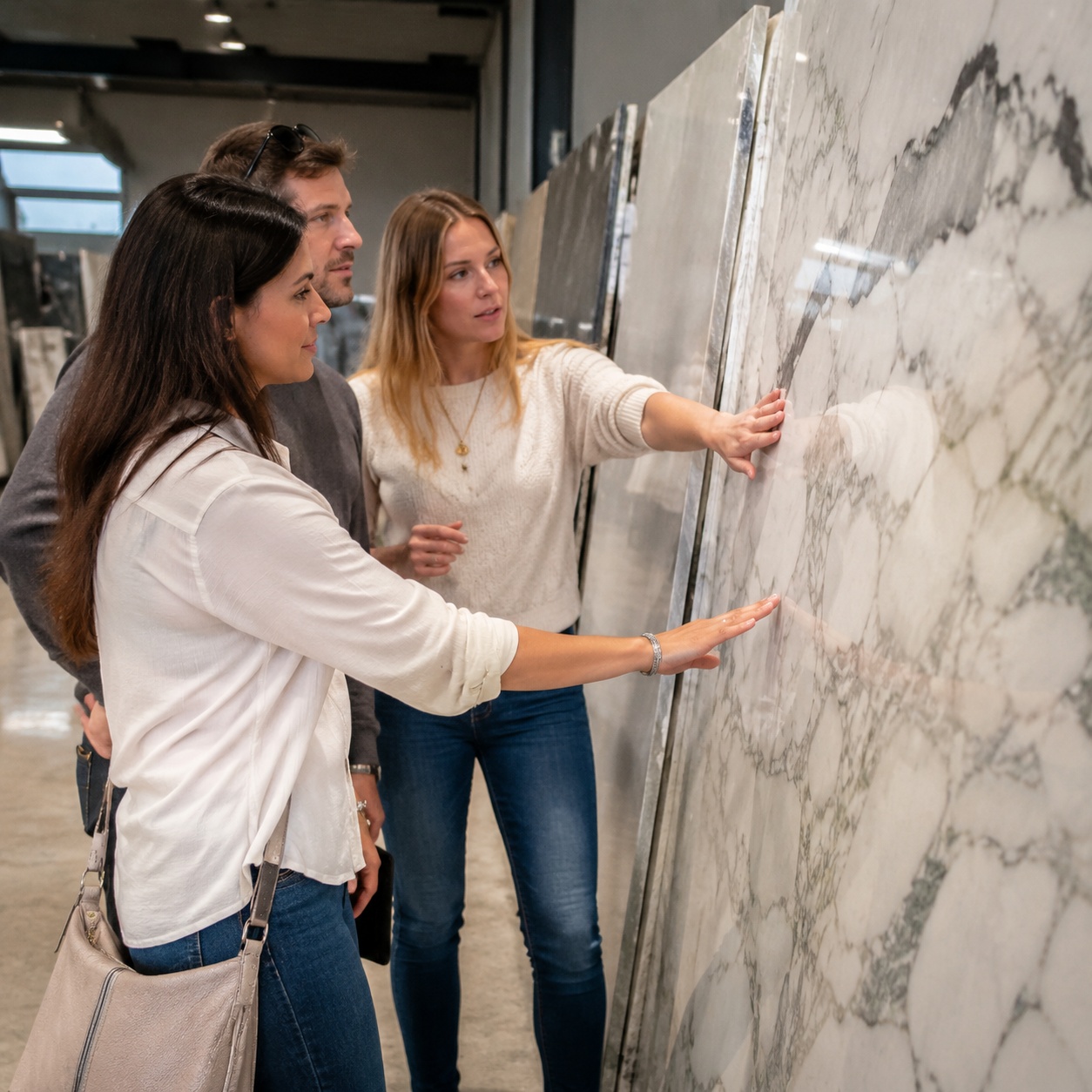
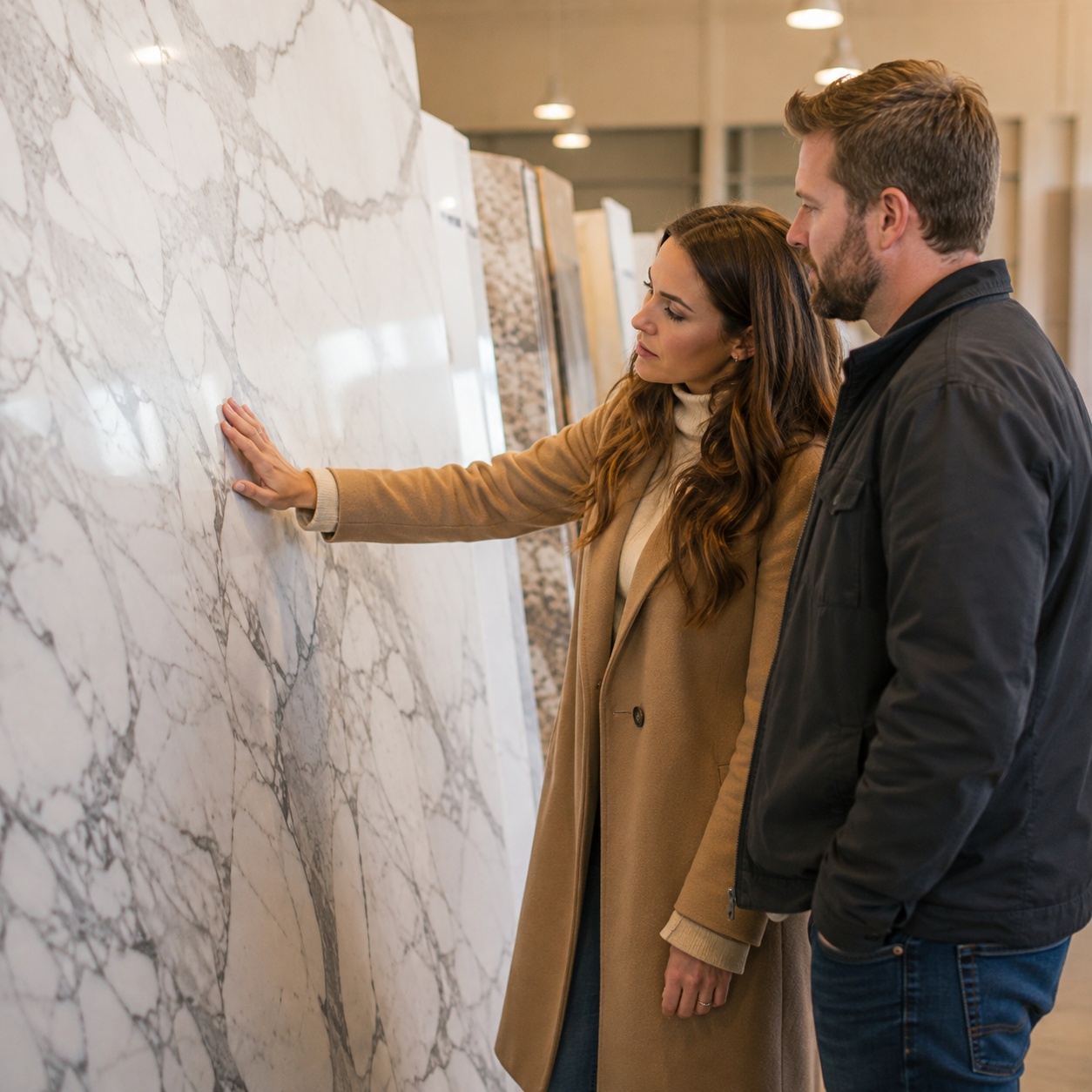
    Quartz is produced by a number of manufacturers, and each one offers its own collections, warranty terms and surface finishes. The marble-look collections are the ones most homeowners are drawn to, engineered with veining meant to read like natural stone. The differences between lines are far easier to judge with the slabs in front of you than from a sample chip.

    Because quartz is manufactured, it can be produced in colors and patterns that natural stone simply cannot offer, from solid whites and blacks to bold blues and greens. This makes it exceptionally versatile for modern kitchen design.

    Visual Style Comparison: Veining, Color Options, and Design Flexibility

    Marble’s veining is organic, unpredictable, and deeply personal. When you select a marble slab, you are choosing that exact piece of stone, with its specific movement, its particular grey or gold tones and its unique character. That individuality is irreplaceable.

    Quartz has made enormous strides in mimicking marble’s appearance. High-end quartz collections now feature realistic veining, soft tonal variation, and even subtle texture. However, a trained eye can usually distinguish engineered stone from the real thing, particularly in how the pattern repeats across a large surface.

    For design flexibility, quartz wins on color range and predictability. For raw visual drama and authenticity, marble remains the gold standard. Your backsplash, cabinetry, and overall kitchen aesthetic should guide which direction serves your space better.

    Feature-by-Feature Performance Comparison

    This is where the real differences emerge. Aesthetics are subjective, but performance is measurable. Understanding how each material handles daily kitchen demands will clarify which one actually fits your life.

    Durability and Hardness: Resistance to Scratches, Chips, and Daily Wear

    Marble scores a five on the Mohs hardness scale, making it softer than granite and significantly softer than quartz, which typically scores between six and seven. In practical terms, marble can be scratched by knives, keys, and even some ceramic dishes if dragged across the surface. Quartz resists scratching far more effectively under normal kitchen use.

    Chipping is a concern for both materials along edges, particularly with thinner slabs or aggressive edge profiles. However, marble’s softer composition makes it more vulnerable to chipping from dropped heavy objects. Edge profile selection matters. A beveled or eased edge tends to be more chip-resistant than a sharp square edge on either material.

    For households with heavy daily cooking activity, quartz’s superior scratch resistance makes it the more practical choice. If you want a deeper look at how these materials stack up in demanding kitchens, this comparison of the best countertop material for a busy kitchen covers the full picture across multiple surface types.

    Stain and Heat Resistance: Spills, Hot Pots, and Everyday Kitchen Use

    Marble is porous, which means liquids can penetrate the surface if not wiped up promptly. Acidic substances such as wine, lemon juice, tomato sauce and vinegar cause a chemical reaction called etching. Etching leaves dull, lighter marks on the surface that are distinct from stains but equally frustrating. Sealing reduces staining risk but does not prevent etching.

    Quartz is non-porous and highly stain-resistant. Spills sit on the surface rather than absorbing into it, making cleanup straightforward. However, quartz has its own heat vulnerability. The polymer resins used in manufacturing can discolor or crack under sustained high heat. Placing hot pots directly on quartz without a trivet is not recommended.

    Marble actually tolerates brief heat contact slightly better than quartz in terms of surface discoloration, but neither material should be used as a hot pad. Trivets and cutting boards are essential habits regardless of which surface you choose.

    Porosity, Sealing, and Hygiene: Maintenance Needs and Food Safety

    Marble’s porosity is its most significant practical drawback in a kitchen environment. Without proper sealing, bacteria and moisture can work into the stone’s surface over time. Sealing marble countertops is not a one-time task. It needs to be repeated periodically depending on usage and the specific stone’s density.

    Quartz requires no sealing. Its non-porous surface does not harbor bacteria or absorb liquids, making it inherently more hygienic for food preparation. This is a meaningful advantage in a space where raw meat, produce, and cooking liquids are handled regularly.

    Hygiene-conscious households and professional-style home kitchens consistently favor quartz for this reason. The maintenance gap between the two materials is real and cumulative. Marble demands ongoing attention that quartz simply does not.

    Longevity and Aging: Patina Development Versus Color Stability

    Marble ages visibly. Over time, it develops a patina, a softening of the surface finish that many homeowners find beautiful and others find distressing. Etching, minor scratches, and subtle color shifts accumulate into a lived-in look that tells the story of the kitchen’s use. Whether that appeals to you is entirely personal.

    Quartz maintains its appearance with minimal change over time. The color and pattern you select on day one will look essentially the same years later, provided it is cleaned properly and protected from prolonged heat exposure. For homeowners who want predictability and visual consistency, quartz delivers it reliably.

    Both materials can last decades when properly cared for. The difference is not longevity. It is the nature of how each material changes, or does not change, with age.

    Cost, Installation, and Long-Term Value

    Budget is always part of the conversation, and both marble and quartz span a wide range of price tiers. Understanding what drives cost helps you make smarter decisions at every stage of the project.

    Upfront Material and Fabrication Costs: Typical Price Ranges

    Featured image

    Both materials are available across entry-level, mid-range, and premium tiers, but the factors driving cost differ. For marble, price is primarily determined by rarity, origin, veining intensity, and slab thickness. Carrara marble sits at the more accessible end; Calacatta and Statuario command significantly higher prices due to their dramatic appearance and limited availability.

    For quartz, brand reputation, collection tier, and surface finish drive pricing. Entry-level quartz costs less than the premium collections. Fabrication complexity, meaning cutouts for sinks, edge profiles and unusual shapes, adds cost for both materials.

    Generally speaking, mid-range quartz and mid-range marble occupy similar price territory. At the premium end, rare marble slabs can exceed even the most expensive quartz products. For an accurate picture of what your specific project will cost, the most reliable step is requesting a written quote based on your actual measurements and material selections.

    Installation Considerations: Weight, Support Requirements, and Complexity

    Both marble and quartz are heavy materials that require proper cabinet support and professional installation. Attempting a DIY installation with either material risks cracking the slab, damaging cabinetry, and voiding any material warranty. Professional countertop installation is strongly recommended for both.

    Marble slabs, particularly thicker cuts, can be extremely heavy and require careful handling during transport and placement. Quartz slabs of comparable thickness carry similar weight. In both cases, your installer will assess whether existing cabinetry needs reinforcement before installation begins.

    Edge profiles affect both cost and installation complexity. Intricate profiles like ogee or waterfall edges require more fabrication time and skill, increasing labor costs. Simpler profiles like eased or beveled edges are more budget-friendly and equally durable.

    Ongoing Maintenance Expenses and Repair Options

    Marble’s ongoing maintenance costs are real. Professional sealing, occasional polishing, and potential honing or refinishing to address etching and scratches add up over the life of the countertop. Minor etching can sometimes be addressed with DIY marble polishing products, but significant damage typically requires professional restoration.

    Quartz requires very little ongoing investment. Regular cleaning with mild soap and water is sufficient for daily maintenance. Damage to quartz, meaning deep chips or cracks, is more difficult to repair invisibly than comparable damage to marble, which can often be honed and repolished to restore its surface.

    If you are also evaluating surfaces for other rooms in your home, the same maintenance logic applies. This guide on the best countertop material for a bathroom vanity explores how these materials perform in lower-traffic but equally visible spaces.

    Resale Value and Impact on Overall Kitchen Investment

    Both marble and quartz are considered premium countertop materials that contribute positively to home value. Buyers in most markets respond well to either surface, particularly when the installation is high quality and the material is in good condition. For a thorough breakdown of how different surfaces perform at resale, the guide on the best countertop material for resale value is worth reading before you finalize your choice.

    Marble carries a prestige factor that resonates strongly with luxury buyers. However, marble showing visible etching, staining, or wear can actually work against a sale if it appears neglected. Quartz in excellent condition tends to photograph well and appeal to a broad buyer demographic.

    The honest answer is that neither material guarantees a specific return on investment. Kitchen remodel value depends heavily on the overall quality of the renovation, the local market, and buyer preferences in your specific area.

    Use Case Scenarios and Choosing Between Marble and Quartz

    The best countertop material is the one that fits your actual life, not the one that looks best in a showroom. These scenarios help clarify which surface makes sense for different households and project types.

    Best Choice for Busy Family Kitchens and High-Traffic Cooking Spaces

    Families with young children, frequent cooking, and high daily traffic need a surface that can take a beating without constant babysitting. Quartz is the clear winner in this scenario. Its stain resistance, scratch resistance, and zero-maintenance sealing requirements make it far more forgiving of the chaos that real family life produces.

    Marble in a busy family kitchen is not impossible, but it requires a genuine commitment to immediate spill cleanup, consistent sealing, and acceptance that the surface will show wear over time. For most families, that level of vigilance is unrealistic. Quartz removes the anxiety and lets you focus on cooking rather than protecting your countertop.

    Ideal Option for Home Bakers, Entertainers, and Aesthetic-Driven Designs

    Marble has one specific functional advantage that bakers genuinely value: its naturally cool surface temperature makes it ideal for rolling pastry dough, tempering chocolate, and working with butter-based doughs. Professional pastry chefs have used marble work surfaces for generations for exactly this reason.

    For homeowners who entertain frequently and prioritize a visually stunning kitchen, marble delivers an atmosphere that quartz struggles to fully replicate. The organic veining, the luminous surface, and the unmistakable authenticity of natural stone create a kitchen that feels genuinely luxurious. If aesthetics are your primary driver and you are willing to maintain the surface carefully, marble rewards that commitment beautifully.

    Suitability for Rental Properties, House Flips, and Budget-Conscious Projects

    For rental properties and house flips, the calculus shifts significantly toward quartz, and often toward entry-level or mid-range quartz specifically. Tenants and future buyers respond well to quartz’s clean appearance, and its durability means it will survive the wear of multiple occupants without requiring costly restoration.

    Marble in a rental property is a liability. Tenants are unlikely to maintain it with the care it requires, and the resulting etching and staining can diminish its value rapidly. The maintenance costs and potential restoration expenses make marble a poor fit for investment properties where durability and low operating costs matter most.

    Decision Framework: Lifestyle, Design Priorities, and Risk Tolerance

    Choosing between these two materials ultimately comes down to three honest questions. First, how much daily maintenance are you genuinely willing to commit to? Second, is the authentic look of natural stone a non-negotiable priority, or will a high-quality engineered alternative satisfy you? Third, how do you feel about a surface that changes and ages visibly over time?

    If your answers point toward low maintenance, consistent appearance, and practical durability, quartz is your material. If you value natural authenticity, are willing to invest in upkeep, and find the idea of a surface that develops character over time appealing, marble is worth the commitment. Neither answer is wrong. They simply reflect different priorities and different relationships with your home.

    Conclusion

    Marble and quartz are both exceptional countertop materials, and both deserve their place in the premium kitchen conversation. The difference is not quality. It is purpose. Quartz is engineered to perform reliably under the demands of modern kitchen life with minimal effort from the homeowner. Marble is a natural material that rewards careful stewardship with unmatched beauty and authenticity.

    For most households prioritizing practicality, hygiene, and low maintenance, quartz is the stronger choice. For homeowners who value natural stone’s irreplaceable character and are prepared to care for it properly, marble is a deeply satisfying investment. Know your lifestyle, be honest about your maintenance habits, and choose the material that will serve you well for years to come.

    FAQ

    Is marble or quartz better for a low-maintenance kitchen countertop?

    Quartz is significantly better for low-maintenance kitchens. It requires no sealing, resists stains without special treatment, and cleans easily with soap and water. Marble requires periodic sealing, immediate attention to spills, and professional restoration if etching or staining occurs. For homeowners who want a beautiful surface without ongoing upkeep, quartz is the practical choice. You can explore a broader comparison of surfaces in this guide to the best low-maintenance countertop materials available today.

    Can quartz realistically mimic the look of natural marble in a kitchen?

    High-end quartz collections have become remarkably convincing in their marble-look designs. The veining, tonal variation, and surface finish of premium quartz products can satisfy most homeowners who want the marble aesthetic without the maintenance demands. However, the pattern in quartz tends to repeat across large surfaces in ways that natural marble does not, and the depth and luminosity of genuine marble remain difficult to fully replicate. Up close and in person, the difference is usually detectable to a discerning eye.

    Will marble or quartz add more value to my home when I sell?

    Both materials are viewed positively by buyers and contribute to a premium kitchen impression. Marble carries stronger prestige associations in luxury markets, but only when it is in excellent, well-maintained condition. Quartz in good condition appeals to a broader buyer pool because of its reputation for durability and low maintenance. The condition of the countertop at the time of sale matters as much as the material itself. A pristine quartz surface will outperform a stained or etched marble surface every time, regardless of which material carries the higher theoretical prestige.

  • Quartz vs Quartzite Countertops: Which Is Better?

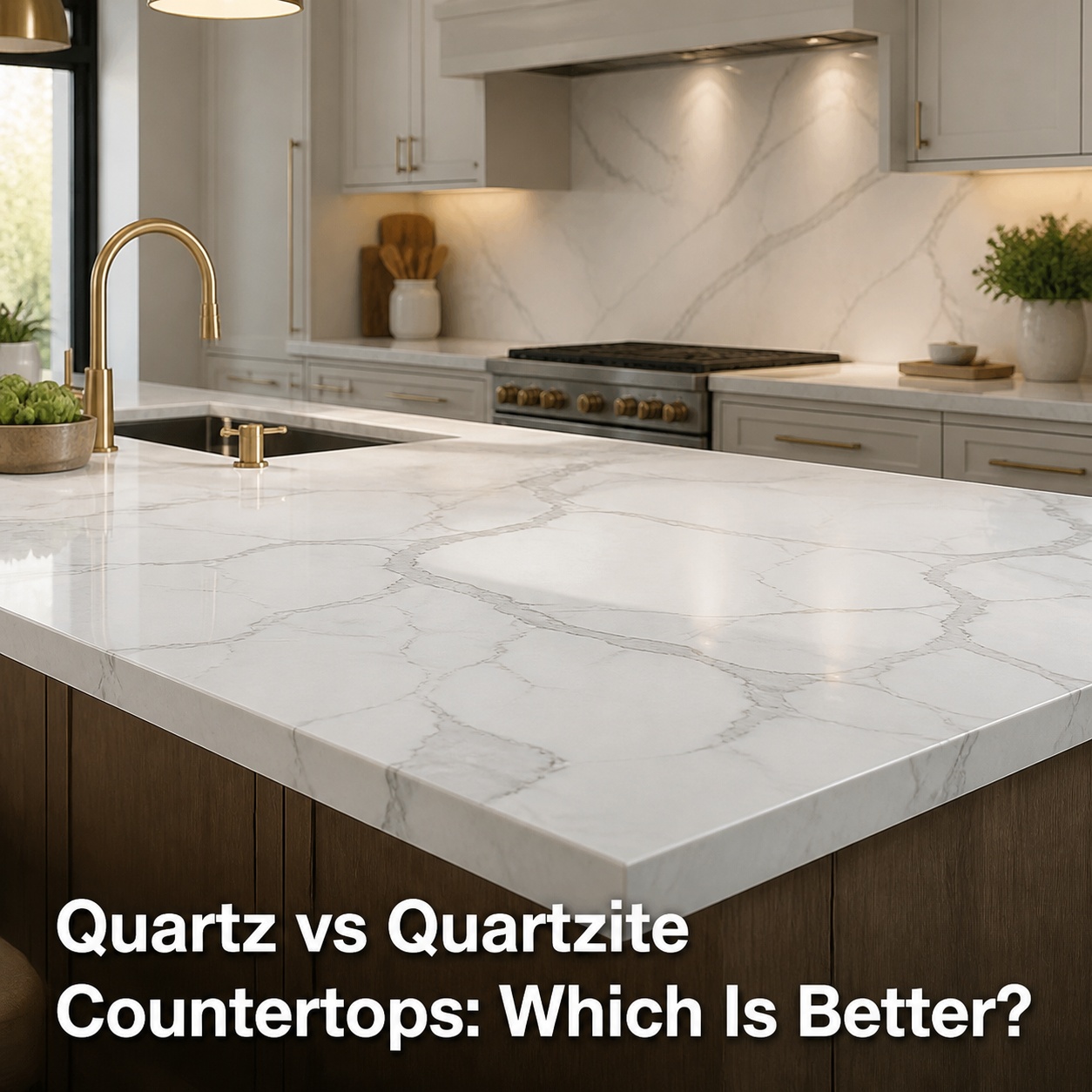
    Quartz vs Quartzite Countertops: Which Is Better?

    Choosing the right countertop material is one of the most consequential decisions you’ll make during a kitchen or bathroom renovation. The surface you select affects how your space looks, how it performs under daily use, and how much time and money you’ll spend maintaining it over the years. Two materials that consistently top the list of popular choices are quartz and quartzite — and while their names sound nearly identical, they are fundamentally different products with very different strengths.

    The confusion between these two materials is completely understandable. Homeowners browse showrooms, see similar-looking slabs, and assume they’re comparing variations of the same thing. They’re not. One is an engineered stone product manufactured in a factory. The other is a natural stone pulled from the earth. That distinction alone shapes everything from their appearance and durability to their maintenance needs and long-term costs.

    This guide breaks down both materials side by side so you can make a confident, informed decision. Whether you’re renovating a high-traffic kitchen, upgrading a bathroom vanity, or planning an outdoor entertaining space, understanding the real differences between quartz and quartzite countertops will save you from costly surprises down the road.

    Overview of Quartz and Quartzite Countertops

    Before comparing performance, it helps to understand exactly what each material is and where it comes from. The names overlap, but the products are entirely distinct in composition, origin, and manufacturing process.

    Feature Quartz Quartzite
    Type Engineered stone Natural stone
    Primary Material Crushed silica + resin binders Metamorphic rock (sandstone)
    Porosity Non-porous Porous (requires sealing)
    Heat Resistance Moderate High
    Maintenance Level Low Moderate
    Color Consistency Uniform and predictable Varies slab to slab

    What Quartz Countertops Are Made Of

    Quartz countertops are an engineered stone product, meaning they are manufactured rather than quarried. The process combines roughly ninety percent crushed silica with resin binders, pigments, and sometimes recycled materials to create a dense, uniform slab.

    Because the manufacturing process is controlled, quartz countertops offer consistent color, pattern, and thickness across every slab. This makes them a reliable choice for large installations where matching slabs matter. The resin binders also make the surface non-porous, which has significant implications for maintenance and hygiene.

    What Quartzite Countertops Are Made Of

    Quartzite is a natural stone formed when sandstone undergoes intense heat and pressure deep within the earth. The result is an extremely hard metamorphic rock composed primarily of silica crystals fused together. It is quarried in large blocks, cut into slabs, and finished for countertop use.

    Because quartzite is a natural stone, no two slabs are identical. The veining, color variation, and surface texture are products of geological processes that cannot be replicated. This uniqueness is a major part of its appeal for homeowners who want a one-of-a-kind surface with authentic character.

    Visual Appearance and Style Differences

    Quartz countertops are available in an enormous range of color options, from solid whites and blacks to patterns that convincingly mimic marble countertops and granite countertops. Interior design flexibility is one of quartz’s strongest selling points because manufacturers can produce virtually any look on demand.

    Quartzite tends to display soft, flowing veins in whites, grays, and warm tones, often resembling high-end marble. The natural variation means your countertop will look like no one else’s. However, color options are limited to what nature produces, so matching specific design palettes can require more searching.

    Feature-by-Feature Performance Comparison

    Understanding how each material performs in real-world conditions is where the decision gets practical. Both materials are strong contenders, but they excel in different areas.

    Durability, Hardness, and Everyday Wear

    Both quartz and quartzite rank among the hardest countertop materials available. Quartzite scores very high on the Mohs hardness scale, often harder than granite countertops, making it exceptionally resistant to physical damage from daily use. Quartz engineered stone also performs well, though the resin content can make it slightly softer than pure quartzite in direct comparisons.

    For everyday durability, both materials hold up well under normal kitchen activity. Chips and cracks are uncommon with either surface when properly installed. The bigger durability concern with quartzite is its porosity, which, if left unsealed, can allow liquids to penetrate and weaken the stone over time.

    Heat, Scratch, and Stain Resistance

    Heat resistance is one area where quartzite clearly outperforms quartz. As a natural stone, quartzite can handle high temperatures without damage. Quartz countertops, by contrast, contain resin binders that can discolor, crack, or warp under sustained heat exposure. Trivets and hot pads are strongly recommended with quartz surfaces.

    Scratch resistance favors quartzite as well, given its exceptional hardness. Quartz performs well against scratching in everyday use, but sharp objects can still leave marks on the resin-containing surface. Stain resistance, however, flips the comparison entirely. Because quartz is non-porous, spills sit on the surface and wipe away cleanly. Quartzite’s porosity means that without proper sealing, acidic liquids like wine, citrus juice, and coffee can penetrate and stain the stone.

    Maintenance, Sealing, and Cleaning Requirements

    If you’re looking for the lowest maintenance countertop option available, quartz wins this category without much debate. Its non-porous surface requires no sealing, no special cleaners, and no periodic treatments. Mild soap and water handle virtually every cleaning task.

    Quartzite requires more attention. Sealing is necessary at installation and must be repeated periodically depending on the stone’s porosity and the sealant used. Daily cleaning is straightforward, but homeowners need to be mindful of acidic substances that can etch the surface even through a sealant layer. The maintenance commitment is manageable but real.

    Installation Considerations and Design Flexibility

    Both materials are heavy and require professional installation. Quartz slabs are dense and uniform, making them somewhat easier for fabricators to work with consistently. Quartzite, being a natural stone, can vary in thickness and density across a single slab, which requires experienced fabricators who understand natural stone behavior.

    Quartz offers superior design flexibility for complex kitchen layouts because its consistent composition allows for precise cuts and edge profiles. Quartzite can achieve beautiful edge profiles as well, but the natural variation in the stone means fabricators must work more carefully to avoid cracking during cutting. For bathroom countertops and vanity applications, both materials perform well in installation.

    Featured image

    Cost, Value, and Long-Term Investment

    Cost is almost always a deciding factor in countertop selection, and both quartz and quartzite sit in the premium tier of countertop materials. Understanding what drives the price helps you make smarter decisions about where to invest.

    Material and Installation Price Ranges

    Both quartz and quartzite are premium countertop materials, but their pricing is driven by different factors. Quartz pricing is influenced by the brand, the complexity of the pattern, the thickness of the slab, and the fabrication required for your specific layout. Higher-end quartz products that closely mimic natural stone aesthetics tend to cost more than simpler solid-color options.

    Quartzite pricing is driven by rarity, origin, and the complexity of the veining. Exotic quartzite varieties sourced from specific regions command significantly higher prices than more common varieties. Installation costs for both materials are comparable, though quartzite’s natural variability can sometimes add fabrication time and cost. For an accurate picture of what your specific project will cost, requesting a written quote based on your actual space is the only reliable approach.

    Lifetime Ownership Costs and Repair Needs

    Over the full life of a countertop, the ongoing costs differ meaningfully between these two materials. Quartz requires virtually no maintenance spending beyond routine cleaning supplies. There are no sealants to purchase, no professional treatments to schedule, and no periodic refinishing. What you pay upfront is largely what you pay in total.

    Quartzite carries ongoing sealing costs that accumulate over time. Depending on the stone’s porosity and the products used, professional sealing or quality DIY sealants represent a recurring expense. If quartzite is not properly maintained and staining or etching occurs, professional restoration can be costly. Chips and cracks in either material typically require professional repair, and both hold up well enough that repairs are infrequent under normal use.

    Impact on Home Resale Value and Buyer Appeal

    Both quartz and quartzite countertops add meaningful value to a home, and both are recognized by buyers as premium upgrades. If maximizing resale value is a priority, the choice between these two materials matters less than the quality of the installation and how well the surface complements the overall kitchen design.

    Quartzite’s natural stone status and unique appearance can be a strong selling point for buyers who value authenticity and luxury. Quartz appeals to buyers who prioritize practicality and low maintenance. In competitive real estate markets, either material signals a quality renovation. The key is ensuring the countertop looks fresh, is free of damage, and fits the style of the home.

    Best Use Cases and How to Choose Between Quartz and Quartzite

    The right material depends heavily on how you use your kitchen, your tolerance for maintenance, and what aesthetic you’re trying to achieve. Neither material is universally better — they simply serve different priorities.

    Ideal Scenarios for Quartz Countertops

    Quartz countertops are an excellent fit for households that prioritize ease of care above all else. Families with young children, homeowners who cook frequently, and anyone who wants a surface that forgives spills and messes without special treatment will find quartz highly practical.

    Quartz is also the better choice for anyone who wants precise color matching across multiple slabs or needs a specific look that natural stone cannot reliably deliver. For those comparing options across multiple stone types, understanding how quartz stacks up against granite can also help clarify where engineered stone fits in the broader countertop landscape.

    • High-traffic kitchens where spills are frequent
    • Households with children or pets
    • Homeowners who want consistent color across large installations
    • Anyone seeking a low-maintenance surface without sealing requirements
    • Spaces where a specific color or pattern must match existing design elements

    Ideal Scenarios for Quartzite Countertops

    Quartzite is the right choice for homeowners who want the authentic beauty of natural stone and are willing to invest in proper maintenance to preserve it. Its heat resistance makes it particularly well-suited for serious cooks who regularly place hot pans on the counter surface.

    Quartzite also works beautifully in spaces where visual drama and uniqueness are priorities. A statement kitchen island or a luxury bathroom vanity in quartzite creates an impression that engineered stone simply cannot replicate. For guidance on selecting the right surface for a bathroom specifically, exploring the best countertop material for a bathroom vanity can help narrow down the decision.

    • Homeowners who value natural stone authenticity and unique veining
    • Kitchens where heat exposure from pots and pans is a regular concern
    • Luxury renovations where visual impact is a top priority
    • Homeowners committed to periodic sealing and proper stone care
    • Spaces where a one-of-a-kind aesthetic is more important than uniformity

    Decision Checklist Based on Lifestyle and Kitchen Habits

    Use this checklist to identify which material aligns with your actual lifestyle rather than just your aesthetic preferences.

    • Do you cook frequently and place hot items on the counter? Quartzite handles heat better.
    • Do you want zero sealing or special maintenance? Quartz is the clear choice.
    • Is a unique, natural appearance your top priority? Quartzite delivers what engineered stone cannot.
    • Do you need consistent color across multiple slabs? Quartz offers reliable uniformity.
    • Are you planning an outdoor kitchen space? Neither material is ideal outdoors, but quartzite handles UV exposure better than quartz.
    • Is long-term maintenance cost a concern? Quartz has lower lifetime ownership costs.
    • Do you want a surface that mimics marble without marble’s fragility? Both can achieve this, but quartzite does it naturally.

    Conclusion

    Quartz and quartzite are both exceptional countertop materials that serve different homeowners well. Quartz wins on maintenance simplicity, stain resistance, and design consistency. Quartzite wins on natural beauty, heat resistance, and authentic stone character. Neither is objectively better — the right choice depends entirely on your priorities, your lifestyle, and how you use your space.

    If low maintenance and predictable performance are your top concerns, quartz is the smarter investment. If you want a surface with genuine natural stone character and you’re prepared to maintain it properly, quartzite delivers a level of beauty that engineered stone cannot fully replicate. Take the time to see both materials in person, consider your daily habits honestly, and choose the surface that fits your real life rather than just your inspiration board.

    FAQ

    Which is more durable for a busy kitchen, quartz or quartzite?

    Both materials are highly durable, but they have different vulnerabilities. Quartz resists stains better due to its non-porous surface, making it more forgiving in a busy kitchen where spills are frequent. Quartzite is harder and handles heat better, but its porosity requires consistent sealing to prevent staining. For a detailed look at how different materials perform under heavy daily use, reviewing guidance on the best countertop material for a busy kitchen provides useful context. Overall, quartz tends to be the more practical choice for high-traffic cooking environments.

    Do quartz and quartzite countertops both need sealing?

    No. Quartz countertops do not require sealing because the manufacturing process creates a non-porous surface. Resin binders fill any gaps between the crushed silica particles, leaving no pathways for liquids to penetrate. Quartzite, as a natural stone, is porous and absolutely requires sealing at installation and periodically thereafter. The frequency of resealing depends on the specific stone’s porosity level and the type of sealant applied. Skipping sealing on quartzite significantly increases the risk of staining and long-term surface damage.

    Is quartz or quartzite better for outdoor kitchen spaces?

    Neither quartz nor quartzite is the ideal choice for outdoor kitchen countertops, but for different reasons. Quartz contains resin binders that degrade under prolonged UV exposure and temperature fluctuations, causing discoloration and surface damage over time. Quartzite handles heat and UV exposure better as a natural stone, making it the more suitable of the two for outdoor use. However, its porosity means it requires more frequent sealing outdoors where it faces rain, humidity, and temperature swings. If outdoor use is your primary application, consulting with a fabricator about the most appropriate stone variety and sealant system for your specific climate is strongly recommended.

  • Quartz vs Granite Countertops: Which One Wins?

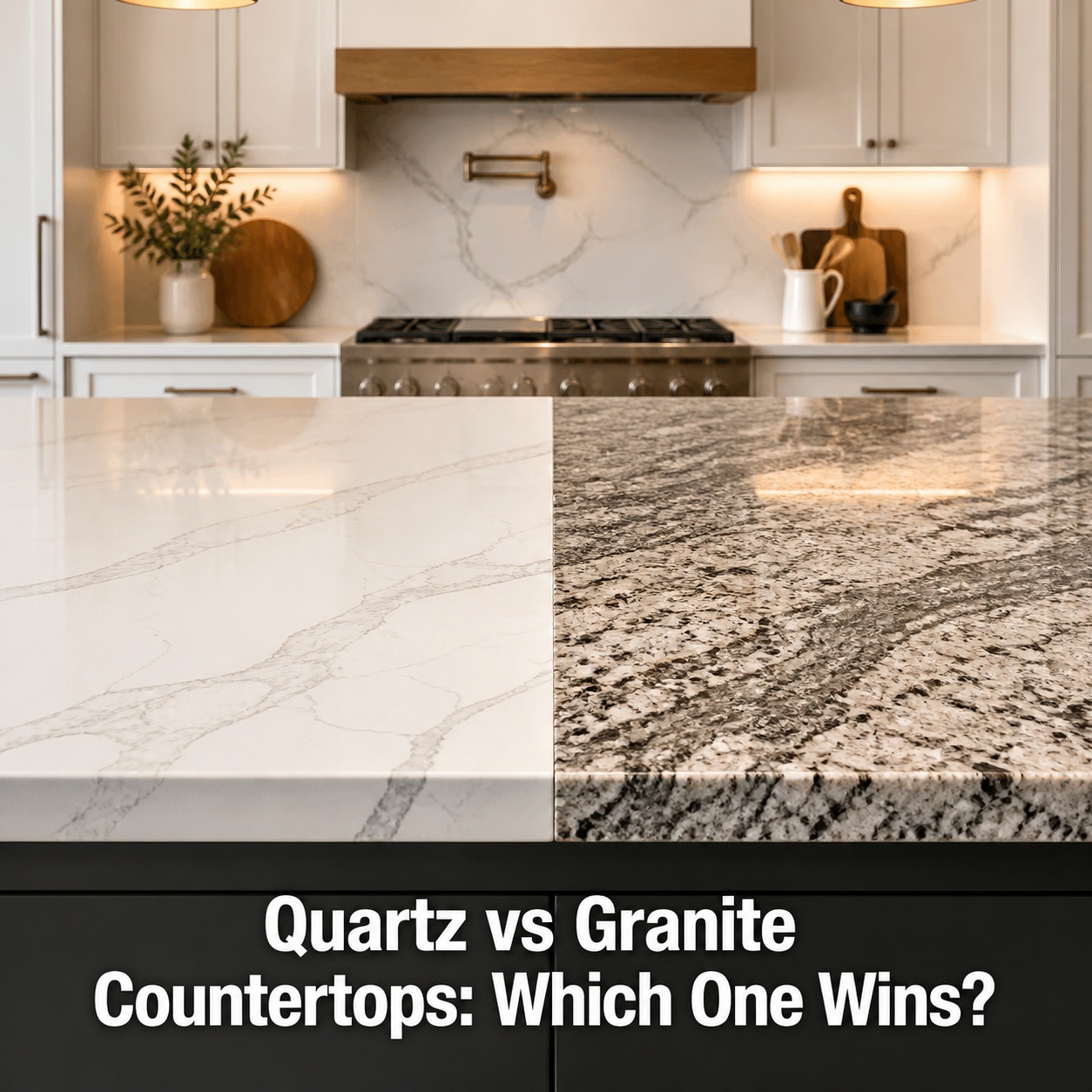
    Quartz vs Granite Countertops: Which One Wins?

    Choosing the right countertop material is one of the most consequential decisions you’ll make during a kitchen or bathroom renovation. The surface you select affects how your space looks, how it functions daily, and how much time and money you’ll spend maintaining it over the years. Two materials consistently rise to the top of every homeowner’s shortlist: quartz and granite.

    Both are beautiful, both are durable, and both carry strong reputations in the home improvement world. But they are fundamentally different products with different strengths, weaknesses, and ideal use cases. Understanding those differences before you commit to a purchase can save you from costly regrets down the road.

    This guide breaks down everything you need to know — from composition and durability to cost, maintenance, and resale value — so you can make a confident, informed decision. No fluff, no filler. Just the facts you need to pick the countertop that actually fits your life.

    Overview of Quartz and Granite Countertops

    Before comparing performance, it helps to understand what each material actually is. Many homeowners assume quartz is a fully synthetic product and granite is purely natural, but the reality is more nuanced than that.

    What Quartz Countertops Are Made Of

    Quartz countertops are engineered stone products, not solid natural stone. They are manufactured by combining roughly ninety percent ground quartz mineral with about ten percent polymer resins, pigments, and binding agents. The result is a dense, non-porous slab with consistent coloring and texture throughout.

    Brands like Silestone have popularized engineered stone countertops by offering a wide range of colors and finishes that natural stone simply cannot replicate. Because the fabrication process is controlled, every slab looks nearly identical to the next, which makes matching sections across a large kitchen much easier.

    The resin content is what gives quartz its non-porous surface — a property that has major implications for hygiene, stain resistance, and sealing requirements, which we’ll cover in detail shortly.

    What Granite Countertops Are Made Of

    Granite is a natural stone formed deep within the earth through the slow cooling of molten rock. It is composed primarily of quartz, feldspar, and mica minerals, along with various other mineral deposits that create its signature speckled, veined appearance.

    Each granite slab is unique. No two pieces look exactly alike, which is a major selling point for homeowners who want a one-of-a-kind surface. The stone is quarried in large blocks, cut into slabs, and then polished or finished before installation.

    Because granite is a natural product, its porosity varies significantly from one slab to another. Some granite varieties are relatively dense and low-porosity, while others are quite porous and require more frequent sealing to stay protected.

    Appearance and Style Differences at a Glance

    Here is a quick side-by-side comparison of the two materials to help frame the discussion:

    Feature Quartz Granite
    Composition Engineered stone with resin Natural stone, quarried
    Appearance Consistent, uniform Unique, varied patterns
    Porosity Non-porous Porous (varies by type)
    Sealing Required No Yes, periodically
    Heat Resistance Moderate High
    Color Options Extensive, consistent Natural, limited by quarry
    Cost Tier Mid to premium Entry to premium

    Granite tends to appeal to homeowners who love organic, natural aesthetics. Quartz appeals to those who prefer a cleaner, more contemporary look with predictable patterning.

    Feature-by-Feature Performance Comparison

    Now that you understand what each material is made of, it’s time to see how they actually perform in real-world conditions. This is where the decision gets practical.

    Durability, Strength, and Lifespan

    Both quartz and granite are exceptionally durable countertop materials. Under normal household conditions, either surface can last a lifetime if properly cared for. However, they handle stress differently.

    Granite is extremely hard and resistant to impact. Dropping a heavy pot on granite is unlikely to cause damage, though it is not impossible. Granite can chip at edges and corners if struck with significant force, particularly on thinner slabs or sharp edge profiles.

    Quartz is slightly more flexible due to its resin content, which actually makes it somewhat more resistant to cracking under pressure. However, that same resin content makes it more vulnerable to thermal shock, which we’ll address in the next section.

    Resistance to Stains, Heat, and Scratches

    This is one of the most important categories for kitchen countertops, and the two materials diverge significantly here.

    Quartz has superior stain resistance because its non-porous surface prevents liquids from penetrating. Coffee, wine, oil, and acidic foods sit on the surface rather than soaking in, making cleanup straightforward. Granite, being porous, can absorb stains if spills are not wiped up promptly or if the sealing has worn off.

    For heat resistance, granite wins clearly. As a natural stone formed under extreme heat, granite can handle hot pots and pans placed directly on its surface without damage. Quartz, by contrast, can be damaged by direct heat exposure because the resin binders can discolor or warp. Always use trivets with quartz.

    Scratch resistance is strong in both materials, though neither is completely scratch-proof. Granite’s hardness makes it highly resistant to everyday scratching from knives and utensils. Quartz performs similarly well, though cutting directly on either surface is never recommended.

    Porosity, Sealing Needs, and Hygiene

    Porosity is a defining difference between these two countertop materials, and it affects everything from daily hygiene to long-term maintenance.

    Quartz is non-porous by design. Bacteria, mold, and mildew cannot penetrate the surface, which makes it an excellent choice for kitchens and bathrooms where hygiene is a priority. It never requires sealing, which is a significant convenience advantage.

    Granite is porous and must be sealed to prevent staining and bacterial infiltration. The frequency of sealing depends on the specific granite variety and how heavily the surface is used. Some granites need sealing annually, while denser varieties may only need it every few years.

    If you are also evaluating surfaces for a bathroom renovation, understanding porosity becomes even more critical. A detailed breakdown of the best countertop material for a bathroom vanity can help you apply the same logic to moisture-heavy environments where sealing lapses can cause real damage.

    Variety of Colors, Patterns, and Finishes

    Color options are an area where quartz holds a clear manufacturing advantage. Because it is an engineered stone, quartz can be produced in virtually any color, from pure whites and deep blacks to bold blues and warm earth tones. Patterns can mimic marble, concrete, or even natural granite with remarkable accuracy.

    Granite’s color options are determined entirely by nature. You are limited to what the quarry produces, which means popular colors can be difficult to source consistently. That said, granite’s natural variation is also its greatest aesthetic strength — no two slabs are identical, and the organic movement of minerals creates depth that engineered stone struggles to replicate.

    Edge profiles are another consideration, as both materials can be fabricated with a wide range of edge styles, from simple eased edges to elaborate ogee or waterfall profiles. The fabrication complexity affects cost, but both materials support the same general edge profile options.

    Finishes also vary. Polished finishes are most common for both materials, but honed, leathered, and brushed finishes are available for granite and increasingly for quartz as well. A honed finish on granite, for example, gives a matte, softer look that pairs beautifully with transitional kitchen designs.

    Maintenance Requirements and Everyday Care

    Featured image

    For most homeowners, daily maintenance is where the rubber meets the road. A beautiful countertop that requires constant attention quickly becomes a source of frustration.

    Quartz is the clear winner for low-maintenance living. Cleaning requires nothing more than mild soap and warm water. No sealing, no special cleaners, no annual treatments. For households that want a high-performing surface without the upkeep, quartz is hard to beat. If low-maintenance countertops are a priority for your household, exploring the top picks for low-maintenance countertop materials gives you a broader view of where quartz stands among all available options.

    Granite requires more intentional care. Regular sealing is non-negotiable for keeping the surface protected. Acidic cleaners, harsh chemicals, and abrasive scrubbers should be avoided. Spills should be wiped up quickly to prevent staining, especially on lighter-colored granite varieties.

    Cost, Value, and Long-Term Investment

    Cost is always a major factor in countertop decisions, and both quartz and granite span a wide range of price tiers depending on quality, origin, and complexity of installation.

    Initial Material and Installation Costs

    Both materials are available at entry-level, mid-range, and premium price points. Entry-level granite tends to be more affordable than entry-level quartz, largely because basic granite slabs are widely available and require less manufacturing processing. As you move into exotic granite varieties — rare colors, unusual veining, imported stone — costs climb significantly.

    Quartz pricing is driven by brand reputation, thickness, pattern complexity, and finish type. Premium engineered stone brands like Silestone command higher prices than generic alternatives, but they also offer more consistent quality and warranty coverage.

    Installation costs are similar for both materials. Both require professional fabrication and installation due to their weight and the precision required for cutting, fitting, and seaming. Edge profile complexity, backsplash integration, and cutouts for sinks and cooktops all influence the final installation cost.

    Ongoing Maintenance and Repair Expenses

    Over the long term, quartz tends to have lower ongoing maintenance costs because it requires no sealing products or professional treatments. The upfront investment is largely the final investment, aside from normal cleaning supplies.

    Granite carries recurring costs for sealing products and, occasionally, professional resealing services. If the surface chips or cracks, repairs are possible but require skilled stone fabricators to match the natural pattern convincingly. Minor chips in quartz can sometimes be repaired with color-matched epoxy kits, though visible repairs on either material are difficult to make completely invisible.

    For an accurate picture of what your specific project will cost, the best approach is always to request a written quote based on your actual kitchen dimensions, material selection, and edge profile preferences. Published numbers are almost always wrong for real jobs.

    Impact on Home Resale Value and Buyer Appeal

    Both quartz and granite are considered premium countertop upgrades that positively influence home resale value. Buyers in most markets respond well to either material, viewing both as indicators of quality construction and thoughtful renovation.

    Granite has historically been associated with luxury kitchens and carries strong buyer recognition. Quartz has grown significantly in buyer appeal due to its low-maintenance reputation and consistent appearance. Understanding which material offers stronger returns in your specific market is worth researching before committing. A broader look at countertop materials ranked for resale value can help you weigh this decision with resale strategy in mind.

    Neither material is a guaranteed return on investment, but both are far more appealing to buyers than laminate or tile alternatives.

    Best Use Cases and Buyer Profiles

    The best countertop material is not universal — it depends heavily on how you live, cook, and use your space.

    Quartz for Busy Families and Low-Maintenance Kitchens

    Quartz is the practical choice for households with children, heavy cooking activity, or simply a preference for minimal upkeep. Its non-porous surface resists staining from everyday kitchen messes, and its consistent appearance makes it easy to design around.

    Families who cook frequently and cannot commit to regular sealing schedules will find quartz far more forgiving. The surface handles daily abuse well without requiring special products or professional maintenance. For a deeper look at how quartz performs in demanding kitchen environments, the guide on the best countertop material for a busy kitchen covers the full picture of what high-traffic cooking spaces actually need.

    • No sealing required, ever
    • Resists stains from coffee, wine, and cooking oils
    • Easy to clean with basic household products
    • Consistent appearance simplifies design planning
    • Wide color options suit modern and transitional kitchens

    Granite for Natural Stone Enthusiasts and Custom Designs

    Granite is the right choice for homeowners who value the authenticity and uniqueness of natural stone. If you want a surface that no one else in the world has — with organic mineral movement, depth, and character — granite delivers that in a way engineered stone cannot fully replicate.

    Custom kitchen designs that incorporate natural stone backsplash elements, stone flooring, or other mineral-rich materials often benefit from the cohesive look that granite provides. The natural variation in granite slabs allows for truly bespoke installations.

    • Every slab is completely unique
    • Exceptional heat resistance for serious cooks
    • Available in exotic varieties from quarries worldwide
    • Pairs naturally with stone backsplash and flooring materials
    • Strong buyer recognition in luxury home markets

    Choosing for High-Traffic, Rental, and Commercial Spaces

    For rental properties, commercial kitchens, or any space that sees extremely heavy use from multiple users, durability and ease of maintenance become the dominant factors. In these contexts, quartz typically wins.

    The non-porous surface of quartz means that even if tenants or staff are not diligent about sealing or careful cleaning, the surface remains protected. Granite in a rental property that goes unsealed for extended periods can develop staining and hygiene issues that are difficult and expensive to reverse.

    Commercial applications should also consider the consistency of quartz. Large commercial installations often require multiple slabs, and the uniformity of engineered stone makes matching sections across long countertop runs much simpler than sourcing matching granite slabs.

    Environmental Considerations and Sustainability Factors

    Sustainability is an increasingly important factor for environmentally conscious homeowners. Both materials have environmental trade-offs worth understanding.

    Granite is a natural material that requires quarrying, which involves significant energy use and landscape disruption. However, it is a completely natural product with no synthetic additives, and its longevity means it rarely needs replacement.

    Quartz manufacturing involves resin binders that are petroleum-based, adding a synthetic component to the environmental footprint. However, some manufacturers use recycled quartz content and are working toward more sustainable fabrication practices. The durability of both materials means neither ends up in landfills quickly, which is a meaningful sustainability advantage over lower-quality countertop alternatives.

    Conclusion

    There is no single winner in the quartz versus granite debate — the right choice depends entirely on your priorities, lifestyle, and budget. Quartz offers unmatched convenience, consistent aesthetics, and superior stain resistance, making it ideal for busy households and low-maintenance kitchens. Granite offers natural beauty, exceptional heat resistance, and a one-of-a-kind character that engineered stone cannot fully duplicate.

    If you prioritize ease of care and modern design flexibility, quartz is likely your best match. If you love the authenticity of natural stone and are willing to invest in periodic maintenance, granite will reward you with a surface that is genuinely unique. Either way, both materials represent a smart, lasting investment in your home.

    FAQ

    Is quartz or granite better for a high-traffic kitchen?

    Quartz is generally the stronger choice for high-traffic kitchens. Its non-porous surface resists staining without sealing, and its consistent durability holds up well under heavy daily use. Granite performs excellently too, but requires more attentive maintenance to stay protected in demanding environments.

    Which countertop material is easier to keep clean and sanitary?

    Quartz is easier to keep clean and sanitary because its non-porous surface does not harbor bacteria or absorb liquids. Simple soap and water is all that is needed for daily cleaning. Granite requires sealing to achieve comparable hygiene performance, and an unsealed or poorly sealed granite surface can absorb bacteria over time.

    How do quartz and granite compare in terms of long-term value?

    Both materials add meaningful value to a home and are viewed positively by buyers in most markets. Granite carries strong luxury associations and appeals to buyers who value natural stone. Quartz appeals to buyers who prioritize low-maintenance living and contemporary design. The long-term value of either material depends largely on the quality of installation, ongoing care, and the preferences of buyers in your specific local market.

  • Best Countertop Material for Resale Value: Top Picks

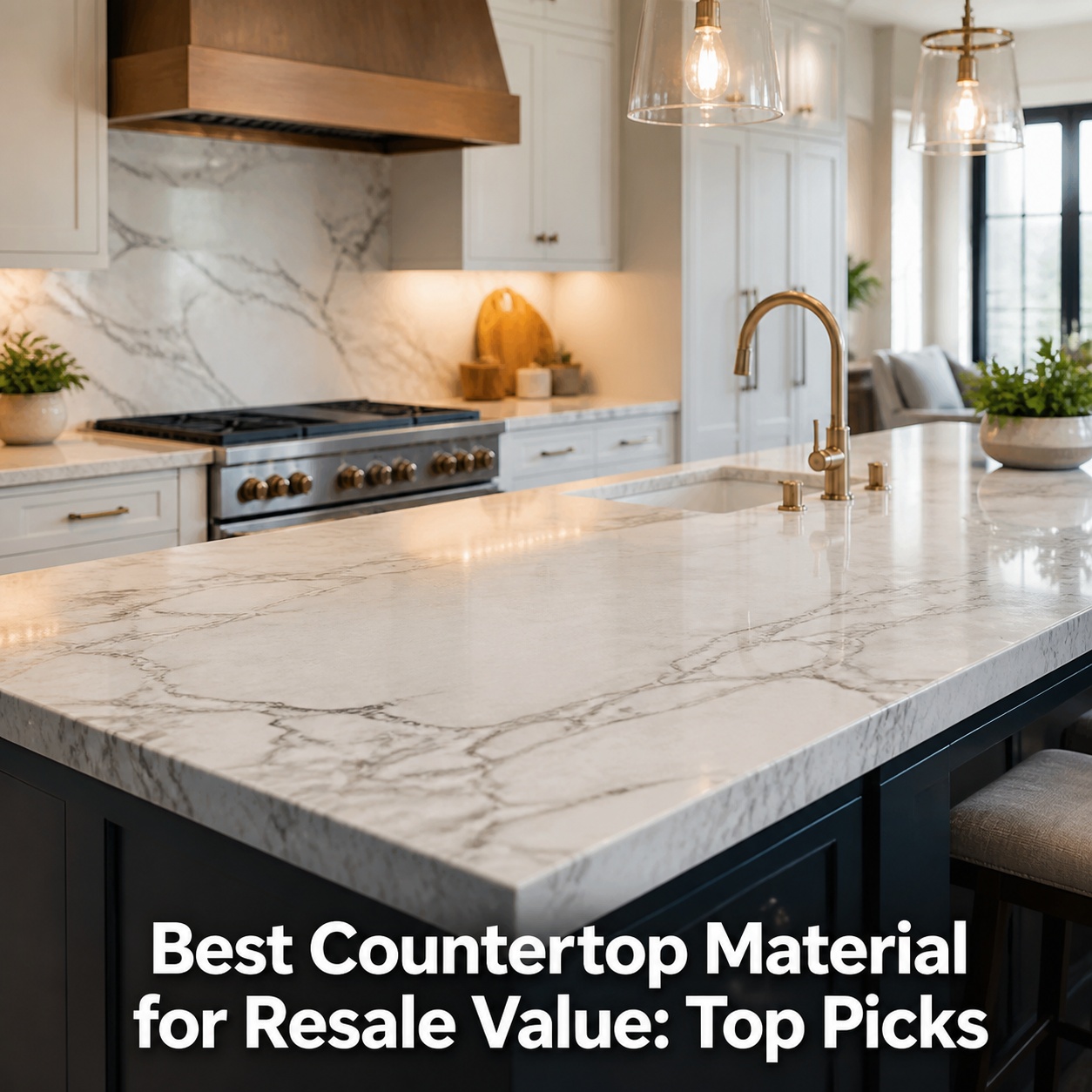
    Best Countertop Material for Resale Value: Top Picks

    Choosing the right countertop material before listing your home can be one of the smartest investments you make in the entire selling process. Buyers walk into a kitchen and immediately form an opinion — and countertops are almost always the first surface their eyes land on. Getting this decision right means understanding not just what looks good, but what actually moves the needle on home resale value.

    The countertop market has expanded dramatically, giving homeowners more options than ever before. From engineered stone to natural stone slabs, from solid surface materials to high-end laminates, each choice carries its own set of trade-offs. Some materials photograph beautifully but require constant upkeep. Others are incredibly durable but lack the visual drama that makes buyers fall in love at first sight.

    This guide breaks down the best countertop materials for resale value, comparing durability, aesthetics, cost tiers, and buyer perception so you can make a confident, informed decision before your home hits the market.

    Understanding Countertop Materials and Resale Value

    Why Countertops Matter to Home Buyers

    Countertops occupy a unique psychological space in the home buying process. They are both functional and decorative, and buyers instinctively use them to gauge the overall quality of a kitchen remodel. A worn or outdated surface signals neglect, while a fresh, premium countertop signals care and investment.

    Real estate professionals consistently report that kitchen upgrades — particularly countertop installation — rank among the top features buyers notice during showings. The kitchen is where families gather, meals are prepared, and daily life unfolds. Buyers are not just purchasing a surface; they are purchasing a lifestyle impression.

    Home buyers also factor in maintenance requirements. A countertop that looks stunning but demands constant sealing, polishing, or careful handling can actually deter practical buyers who want beauty without the burden.

    Key Factors That Influence Resale Value

    Not every countertop upgrade translates equally into property value gains. Several factors determine how much return on investment you can realistically expect from a countertop swap.

    • The price tier of your home and neighborhood
    • The condition and style of existing cabinetry and flooring
    • Local real estate market preferences and buyer demographics
    • The material’s perceived prestige and durability
    • How well the countertop complements the overall interior design trends

    A premium marble countertop in an entry-level neighborhood may not recoup its full cost. Conversely, installing a budget laminate in a luxury property can actively hurt your home appraisal outcome. Matching the upgrade to the market is essential.

    Overview of Popular Countertop Options

    The countertop comparison landscape includes materials that span a wide range of price tiers, aesthetics, and performance profiles. Here is a quick overview of the most common options and how they stack up at a glance.

    Material Durability Maintenance Buyer Appeal Best For
    Quartz Excellent Low Very High Most home types
    Granite Excellent Moderate Very High Mid to luxury homes
    Marble Moderate High High (luxury) Luxury properties
    Solid Surface Good Low Moderate Entry to mid-range
    Laminate Moderate Low Moderate Entry-level homes
    Butcher Block Moderate High Niche Farmhouse styles
    Concrete Good High Niche Custom/modern homes

    Top Countertop Materials for Maximizing Resale Value

    Quartz: Engineered Appeal and Consistent Performance

    Quartz countertops have become the dominant choice for homeowners focused on resale value, and for good reason. As an engineered stone product, quartz combines natural minerals with resins and pigments to create a surface that is non-porous, highly durable, and available in an enormous range of colors and patterns.

    Buyers love quartz because it requires virtually no sealing and resists staining from common kitchen spills. If you are researching the most practical surface for a high-traffic kitchen, quartz consistently ranks at the top for good reason — it handles daily punishment without losing its appearance.

    Quartz also photographs exceptionally well, which matters enormously in an era where most buyers begin their home search online. Listings with quartz countertops tend to generate stronger initial interest and more showing requests.

    Granite: Timeless Natural Stone with Broad Buyer Appeal

    Granite countertops have maintained their status as a premium kitchen upgrade for decades. As a natural stone, each granite slab is unique, offering veining, color variation, and depth that engineered products can only approximate. This uniqueness is a genuine selling point for buyers who value authenticity.

    Granite is extremely hard and heat-resistant, making it a practical choice for serious home cooks. It does require periodic sealing to maintain its stain resistance, but most buyers are familiar with this requirement and accept it as part of owning a natural stone surface.

    From a home resale value perspective, granite countertops signal quality and permanence. They are broadly appealing across buyer demographics, from first-time purchasers to seasoned homeowners upgrading to a larger property.

    Marble: High-End Aesthetic and Its Impact on Perceived Value

    Marble countertops occupy a special category in the world of kitchen remodeling. The material’s distinctive veining and luminous surface quality create an immediate impression of luxury that few other materials can match. In the right property, marble can significantly elevate perceived value and attract buyers who are specifically seeking high-end finishes.

    The trade-off is real, however. Marble is softer than granite or quartz, making it more susceptible to scratching and etching from acidic foods and liquids. Maintenance requirements are higher, and buyers who understand marble’s vulnerabilities may factor ongoing care costs into their offer.

    Marble works best as a resale investment in luxury and custom properties where buyers expect premium materials and are willing to accept the upkeep. In mid-range homes, the cost of marble installation may not translate into a proportional increase in sale price.

    Solid Surface and High-End Laminates: Budget-Friendly Value Boosters

    Solid surface countertops, such as those made from acrylic or polyester composites, offer a seamless, non-porous surface that is easy to maintain and repair. While they do not carry the prestige of natural stone, they present a clean, modern appearance that appeals to practical buyers.

    High-end laminate countertops have evolved significantly and now convincingly mimic the look of stone, wood, and concrete. For entry-level and mid-range homes, upgrading from worn or damaged laminate to a fresh, high-quality version can meaningfully improve buyer perception without requiring a premium material investment.

    Butcher block countertops and concrete countertops also appear in this conversation, though their appeal tends to be more niche. Butcher block suits farmhouse and cottage-style kitchens, while concrete countertops attract buyers drawn to industrial or custom modern aesthetics.

    Features, Benefits, Pricing, and User Experience Compared

    Durability, Maintenance, and Longevity

    Durability is one of the most important factors buyers consider, even if they do not articulate it directly. A countertop that shows chips, stains, or surface damage during a showing immediately raises concerns about the overall condition of the home.

    • Quartz and granite offer the highest durability among common countertop materials
    • Marble is beautiful but softer and more prone to surface damage over time
    • Solid surface materials can be sanded and repaired, extending their useful life
    • Laminate countertops are vulnerable to moisture damage and edge chipping
    • Butcher block requires regular oiling and is susceptible to water damage near sinks
    • Concrete countertops can crack and require sealing to prevent staining

    For sellers, choosing a material with strong durability means the countertop will still look excellent by the time the home goes on the market, even if the installation happened some time before listing.

    Featured image

    Style, Color Options, and Design Versatility

    Interior design trends shift, but certain countertop aesthetics have proven remarkably durable in their appeal. Neutral tones — whites, grays, soft beiges — consistently perform well across buyer demographics because they pair easily with a wide range of cabinet colors and flooring choices.

    Quartz offers the broadest color and pattern range of any countertop material, including options that closely mimic marble and granite. This versatility makes it an excellent choice for sellers who want maximum buyer appeal without committing to a single aesthetic direction.

    Granite’s natural variation means no two slabs are identical, which can be a strength or a challenge. Buyers who love the specific slab will be enthusiastic; those who prefer a different look may be less moved. Selecting a granite with broad, neutral appeal — rather than a highly distinctive or polarizing pattern — is a smart strategy for resale.

    Installation Costs, Material Pricing, and Return on Investment

    Countertop installation costs vary based on material choice, slab thickness, edge profile complexity, cutouts for sinks and appliances, and the size of the surface area being covered. Understanding what drives cost helps you make smarter decisions without overspending.

    Natural stone materials like granite and marble sit at the premium end of the cost spectrum, with quartz positioned at a similar tier. Solid surface countertops fall into the mid-range category, while laminate countertops represent the most budget-friendly option. Porcelain countertops and stainless steel countertops occupy specialized niches, with porcelain trending upward in popularity for its durability and design flexibility.

    Return on investment depends heavily on matching material quality to home price tier. A kitchen upgrade that uses premium materials in a home priced at the upper end of its market will typically recoup a higher percentage of its cost than the same upgrade in a lower-priced property. For accurate pricing on your specific project, requesting a written quote based on your actual space is always the most reliable approach.

    Daily Use Experience and Buyer Perceptions

    Buyers who tour a home often run their hands across countertops, open cabinet doors, and mentally simulate daily life in the space. The tactile and visual experience of a countertop matters as much as its technical specifications.

    Quartz feels solid and smooth, with a consistent surface that reads as high quality even to buyers who cannot identify the material by name. Granite has a similar weight and solidity, with the added visual interest of natural variation. Marble feels cool and luxurious, immediately communicating premium quality to buyers who recognize it.

    Solid surface materials feel slightly less substantial than stone but offer a seamless appearance that reads as clean and modern. Laminate, even high-end versions, tends to feel lighter and less premium — which is why it works best in homes where buyers are not expecting stone-level finishes.

    Alternatives, Trade-Offs, and Smart Buying Advice

    Best Choices for Entry-Level and Mid-Range Homes

    For entry-level and mid-range properties, the goal is to maximize buyer appeal without over-investing in materials that the market will not reward. Solid surface countertops and high-quality laminate options are strong performers in this category.

    If the budget allows a step up, quartz is an excellent choice even for mid-range homes because its broad appeal and low maintenance requirements resonate with a wide buyer pool. Many buyers in this segment are purchasing their first home and prioritize practicality over prestige.

    Avoiding over-improvement is just as important as avoiding under-investment. Installing marble countertops in a home priced at the entry level of its market is unlikely to generate a proportional return and may actually confuse buyers about the property’s positioning.

    Best Choices for Luxury and Custom Properties

    Luxury and custom properties demand materials that match the overall quality level of the home. Buyers in this segment have high expectations and will notice if countertops feel out of place with premium cabinetry, high-end appliances, and custom millwork.

    Marble, premium granite, and high-specification quartz are all appropriate choices for luxury properties. Porcelain countertops are also gaining traction in this segment, offering exceptional durability and a refined aesthetic that appeals to design-conscious buyers.

    For luxury bathrooms, the countertop choice matters just as much as in the kitchen. Exploring options for bathroom vanity surfaces that complement your kitchen selection creates a cohesive, high-end impression throughout the home.

    How to Choose the Right Countertop for Your Market and Budget

    Choosing the right countertop starts with understanding your local real estate market. What are comparable homes in your area featuring? What do buyers in your price range expect? Talking to a local real estate agent before committing to a countertop upgrade is a practical first step.

    Next, consider the condition of your existing kitchen. A new countertop paired with worn cabinets and outdated fixtures may not deliver the return you expect. Sometimes a coordinated approach — refreshing multiple elements together — produces better results than a single high-cost upgrade.

    • Research comparable listings in your neighborhood for countertop trends
    • Consult a real estate professional before committing to a specific material
    • Consider the full kitchen picture, not just the countertop in isolation
    • Prioritize materials with broad buyer appeal over personal preference
    • Factor in installation timeline relative to your planned listing date

    If you want to minimize ongoing upkeep while still impressing buyers, reviewing low-maintenance countertop options can help you find materials that look premium without demanding constant attention.

    Common Mistakes to Avoid When Upgrading for Resale

    Sellers frequently make a handful of predictable mistakes when upgrading countertops for resale. Recognizing these pitfalls in advance can save significant time and money.

    • Choosing a highly personal or polarizing color that limits buyer appeal
    • Over-investing in premium materials for a home priced below the luxury tier
    • Neglecting the condition of surrounding elements like cabinets and backsplash
    • Selecting materials based solely on current trends rather than timeless appeal
    • Underestimating installation timelines and rushing the project before listing
    • Skipping professional installation to save money, resulting in visible seams or poor fit

    The countertop comparison process should always include a realistic assessment of what the local market will reward. Spending more does not automatically mean earning more at closing.

    Conclusion

    Countertops are one of the highest-visibility elements in any home, and choosing the right material before selling can meaningfully influence buyer perception, offer strength, and final sale price. Quartz and granite consistently deliver the strongest combination of durability, aesthetics, and broad buyer appeal across most market segments, which is why they are the safe answer for the widest range of homes. Quartzite appeals to buyers who want natural stone with the look of marble and more resistance to daily wear. Marble excels in luxury properties where buyers expect premium finishes.

    The smartest approach is always to match the material to the market, consider the full kitchen picture, and prioritize broad appeal over personal taste. A well-chosen countertop does not just look good. It communicates quality, care, and value to every buyer who walks through the door.

    FAQ

    Which countertop material typically offers the best overall resale value?

    Quartz countertops consistently rank as the top performer for resale value across the widest range of home types and price points. Their combination of durability, low maintenance requirements, design versatility, and strong buyer recognition makes them a reliable investment. Granite countertops are a close second, particularly in mid-range to luxury properties where natural stone carries significant prestige. The best choice ultimately depends on your specific market, home price tier, and the overall condition of your kitchen.

    Is it worth replacing countertops before selling my home?

    Replacing countertops before selling is generally worth it if the existing surfaces are visibly worn, damaged, or significantly outdated. Fresh countertops improve listing photos, create a stronger first impression during showings, and signal to buyers that the home has been well maintained. The key is selecting a material that aligns with your home’s price tier and local buyer expectations. Over-investing in premium materials for a home priced at the entry level of its market may not generate a proportional return, so calibrating the upgrade to the market is essential.

    How do I balance countertop upgrade costs with expected resale price gains?

    Balancing upgrade costs with expected gains requires understanding your local real estate market and the price tier of your home. Start by researching what comparable homes in your area feature — if most listings at your price point include quartz or granite, installing a similar material keeps you competitive. If comparable homes feature solid surface or updated laminate, a premium stone upgrade may not be necessary. The goal is to meet or slightly exceed buyer expectations for your market without over-improving. Getting a written quote for your specific project gives you a concrete cost baseline to compare against realistic sale price expectations in your neighborhood.

  • Best Countertop Material for a Bathroom Vanity

    Best Countertop Material for a Bathroom Vanity

    Choosing the right surface for your bathroom vanity is one of those decisions that feels small until you’re living with the wrong choice. A countertop that chips, stains, or warps under daily moisture exposure becomes a constant frustration. The good news is that the market offers genuinely excellent options across every budget, style preference, and performance requirement.

    Your bathroom vanity countertop takes more abuse than most people realize. It faces daily water splashes, toothpaste, makeup, hair products, and the occasional hot styling tool. Unlike kitchen surfaces, bathroom countertops are smaller in square footage but higher in daily contact, which means material quality and surface finish matter enormously.

    This guide walks through every major countertop material available for bathroom vanities, comparing real-world performance, maintenance demands, aesthetic range, and cost structure. Whether you are planning a full bathroom remodel or simply replacing a worn surface, the information here will help you make a confident, informed decision.

    Key Factors When Choosing a Bathroom Vanity Countertop

    Before comparing specific materials, it helps to understand what actually separates a good bathroom countertop from a frustrating one. Four core factors drive almost every decision: how the material handles moisture and heat, how long it lasts with realistic care, how it looks in your space, and what the full cost of ownership actually looks like.

    Moisture, Heat, and Stain Resistance

    The bathroom is a wet environment by definition. Water resistance is not optional — it is the baseline requirement for any countertop material you consider. Some materials handle moisture beautifully without any special treatment, while others require regular sealing to prevent water infiltration and staining.

    Heat resistance matters more than many homeowners expect. Curling irons, flat irons, and hair dryers get set down on vanity surfaces constantly. A material that scorches, discolors, or cracks under moderate heat will show damage quickly.

    Stain resistance is equally critical in a bathroom setting. Makeup, nail polish, hair dye, and cleaning products all interact with countertop surfaces differently depending on porosity and surface finish. Porous materials absorb stains faster and require more proactive maintenance to stay looking clean.

    Material Water Resistance Heat Resistance Stain Resistance Sealing Required
    Quartz Excellent Good Excellent No
    Granite Good Excellent Good Yes
    Marble Fair Good Fair Yes
    Solid Surface Excellent Fair Good No
    Porcelain Tile Excellent Excellent Excellent No
    Laminate Fair Poor Good No

    Durability, Maintenance, and Longevity

    Durability in a bathroom context means resistance to chipping, cracking, scratching, and surface degradation over years of use. Natural stone like granite and marble is physically hard but can chip at edges. Engineered materials like quartz and solid surface offer more consistent durability across the entire slab.

    Maintenance requirements vary dramatically between materials. Some surfaces need nothing more than a damp cloth, while others require periodic sealing, specialized cleaners, or professional refinishing to maintain their appearance. Honest maintenance expectations should factor heavily into your final choice.

    Longevity is the long game. A material that looks great on installation day but requires replacement within a decade is rarely the economical choice it appeared to be at purchase.

    Style, Color Options, and Overall Aesthetic

    Aesthetics drive bathroom remodel decisions more than almost any other factor. The countertop surface is one of the most visible elements in the room, and it sets the tone for the entire vanity area. Natural stone offers unique veining and depth that engineered materials approximate but rarely fully replicate.

    Color range varies significantly by material. Quartz offers the widest engineered color palette. Granite and marble are limited to what nature produces, which is actually a selling point for many homeowners who value organic uniqueness. Laminate has improved dramatically in visual quality and now mimics stone convincingly at a fraction of the cost.

    Budget, Installation, and Resale Value

    Budget conversations in countertop selection need to account for more than material cost alone. Fabrication, edge profiling, sink cutouts, installation labor, and any necessary structural reinforcement all contribute to the final project cost. Natural stone and quartz sit at the premium end. Solid surface occupies the mid-range. Laminate and basic tile represent entry-level investment.

    Resale value is a legitimate consideration for homeowners who plan to sell. Premium countertop materials in bathrooms consistently attract buyer attention and support stronger sale prices. A bathroom remodel featuring quality countertop material signals overall home care to prospective buyers.

    Top Bathroom Vanity Countertop Materials Compared

    Quartz: Best All-Around Balance of Performance and Style

    Quartz is an engineered stone product made from ground quartz crystals bound with resin. It delivers exceptional water resistance, requires no sealing, and resists staining from virtually every common bathroom product. For homeowners who want premium performance without demanding maintenance, quartz is consistently the top recommendation.

    The aesthetic range is broad. Manufacturers produce quartz slabs that mimic marble veining, solid granite tones, and contemporary concrete looks. The consistency of engineered production means fewer surprises in color matching across a vanity surface.

    The main limitation is heat sensitivity. Resin binders in quartz can discolor under sustained high heat, so placing hot styling tools directly on the surface is not advisable. A simple heat mat eliminates this concern entirely.

    Granite: Natural Stone Look with Strong Durability

    Granite is a natural stone with exceptional hardness and heat resistance. Each slab is genuinely unique, offering organic color variation and veining that cannot be replicated. For homeowners who value authenticity in natural stone, granite delivers a look that engineered alternatives cannot fully match.

    Water resistance is good but not perfect. Granite is porous and requires periodic sealing to prevent moisture infiltration and staining. A properly sealed granite surface handles bathroom conditions well. Neglected sealing leads to staining and potential bacterial harboring in surface pores.

    Granite costs more than laminate and solid surface but is generally comparable to or slightly less than premium quartz depending on slab selection and fabrication complexity. The investment supports strong resale value in a bathroom remodel context.

    Marble: High-End Luxury with Extra Care Needs

    Marble is the prestige choice in bathroom design. Its distinctive veining, cool surface feel, and association with luxury interiors make it a perennial favorite for primary bathrooms and high-end renovations. No other material quite replicates the visual depth of genuine marble.

    The trade-off is real and significant. Marble is porous, acid-sensitive, and prone to etching from common bathroom products including toothpaste and many cleaning agents. Regular sealing is essential, and even sealed marble requires careful product selection to avoid surface damage.

    Cultured marble offers a manufactured alternative that mimics the look at lower cost with better stain resistance. It lacks the depth and uniqueness of natural marble but suits budget-conscious projects where the aesthetic matters more than authenticity.

    Solid Surface: Seamless Look and Easy Repairability

    Solid surface materials like Corian are acrylic-based composites that offer a completely seamless appearance, including integrated sinks. The absence of seams eliminates the primary water infiltration point in most countertop installations, making solid surface genuinely excellent for bathroom applications.

    Scratches and minor damage can be sanded out and refinished, which is a unique advantage over stone and tile. This repairability extends the practical lifespan of solid surface installations significantly. The material sits in the mid-range cost tier, making it accessible for most bathroom remodel budgets.

    Heat resistance is the weak point. Solid surface materials can scorch or warp under direct heat exposure, so the same caution that applies to quartz applies here. The aesthetic range is good but lacks the visual depth of natural stone.

    Ceramic and Porcelain Tile: Versatile and Budget-Friendly

    Tile countertops offer remarkable design flexibility. Ceramic and porcelain tile come in thousands of colors, patterns, and sizes, allowing genuinely custom looks at accessible price points. Porcelain specifically offers superior water resistance and durability compared to standard ceramic, making it the preferred choice for bathroom vanity applications.

    The grout lines between tiles are the primary maintenance challenge. Grout is porous and stains easily without proper sealing. Epoxy grout eliminates most of this concern but adds installation complexity and cost. Properly installed and maintained tile countertops last for decades.

    Heat resistance is excellent — tile handles hot styling tools without damage. The hard surface can feel cold and unforgiving, and dropped items are more likely to chip tile edges than they would damage stone or solid surface.

    Laminates: Most Affordable with Modern Design Options

    Featured image

    Laminate has shed its dated reputation. Modern laminate products feature high-resolution photographic printing that convincingly mimics stone, wood, and concrete at a fraction of the cost of those materials. For rental properties, guest bathrooms, or budget-conscious primary bathroom updates, laminate delivers respectable performance.

    The limitations are real. Laminate cannot be repaired once chipped or swollen from water infiltration. Edges and seams are vulnerable to moisture damage, and the surface cannot handle heat without permanent damage. These limitations make laminate a practical entry-level choice rather than a long-term premium investment.

    For homeowners researching how bathroom countertop choices compare to other rooms in the home, the best countertop material for a busy kitchen follows similar logic — performance requirements drive material selection more than aesthetics alone.

    User Experience, Maintenance, and Everyday Use

    How Each Material Handles Daily Bathroom Habits

    Daily bathroom use is repetitive and often careless. Products get set down without thought, water splashes constantly, and cleaning happens quickly rather than carefully. The best countertop materials for bathroom vanities accommodate this reality without requiring behavioral changes from users.

    Quartz and porcelain tile handle daily bathroom habits with the least friction. Both resist staining from common products, clean easily, and do not require special care routines. Granite performs similarly when properly sealed. Marble and laminate demand more conscious user behavior to maintain their appearance.

    Cleaning Requirements and Product Compatibility

    Most bathroom countertop materials clean effectively with mild soap and water. The problems arise from harsh cleaning products. Bleach-based cleaners damage marble and can dull quartz finishes over time. Abrasive scrubbers scratch solid surface and laminate. Acid-based cleaners etch marble and unsealed granite.

    • Quartz: mild soap, pH-neutral cleaners, avoid bleach and abrasives
    • Granite: stone-specific cleaners, avoid acidic products
    • Marble: pH-neutral only, never acidic products
    • Solid surface: mild abrasive cleaners acceptable, avoid harsh chemicals
    • Tile: most cleaners safe, focus on grout maintenance
    • Laminate: mild soap only, avoid abrasives and excess water near seams

    Common Problems and How Different Materials Age

    Every material develops characteristic aging patterns. Marble etches and develops a patina that some homeowners find beautiful and others find frustrating. Granite maintains its appearance well with proper sealing but can chip at edges over time. Quartz holds its color and finish consistently for many years.

    Solid surface develops fine scratches with heavy use but can be refinished. Tile grout discolors without maintenance. Laminate edges and seams eventually show wear, particularly around the sink area where water exposure is highest.

    Understanding how a material ages helps set realistic expectations and informs long-term satisfaction with the investment.

    Noise, Feel, and Comfort in Daily Use

    Tactile experience matters more than most countertop guides acknowledge. Natural stone surfaces feel cool and solid underhand. Solid surface has a slightly warmer feel. Tile feels hard and cold. Laminate has a slightly hollow sound when tapped that some users find cheap-feeling despite improved visual quality.

    The sink integration also affects daily experience. Undermount sinks work with stone, quartz, and solid surface. Solid surface allows fully integrated sinks with no seam at all. Tile countertops typically use drop-in sinks. The sink-to-countertop connection affects both aesthetics and long-term water resistance at that critical junction.

    Alternatives, Design Scenarios, and Buying Advice

    Best Material by Bathroom Type (Primary, Guest, Kids, Rental)

    Primary bathrooms justify premium investment. Quartz or granite deliver the performance and aesthetics that make daily use genuinely pleasant. Marble suits primary bathrooms where the homeowner appreciates its beauty and accepts its maintenance requirements.

    Guest bathrooms see lighter use and benefit from mid-range choices. Solid surface or well-selected granite provide excellent results without maximum investment. Kids’ bathrooms need durability and easy cleaning above all else — quartz or porcelain tile are the practical winners here.

    Rental properties call for entry-level durability. Laminate or basic ceramic tile minimize upfront cost while providing adequate performance for tenant use. The goal in rental contexts is replacement cost management rather than premium longevity.

    Alternatives for Eco-Friendly and Unique Looks

    Concrete countertops offer a genuinely distinctive industrial aesthetic that suits contemporary and minimalist bathroom designs. Concrete requires sealing and ongoing maintenance but delivers a custom look unavailable in any manufactured product. Soapstone is another natural stone alternative with a softer, matte appearance and natural antimicrobial properties that suit bathroom environments well.

    Recycled glass countertops embed colorful glass pieces in resin or cement bases, creating unique visual effects. These materials appeal to homeowners prioritizing sustainability and individuality over conventional aesthetics. Performance varies by specific product, so material-specific research matters here.

    For homeowners who want to understand the full landscape of low-maintenance options before committing, reviewing the top picks for low-maintenance countertop materials provides useful comparative context across all room types.

    How to Read Quotes, Compare Prices, and Avoid Hidden Costs

    Countertop quotes vary significantly based on factors that are not always obvious at first glance. Material grade, slab thickness, edge profile complexity, sink cutout type, and installation access all affect final pricing. A quote that looks lower than competitors may exclude fabrication, edge finishing, or removal of the existing countertop.

    • Ask whether the quote includes material, fabrication, and installation separately
    • Confirm whether sink cutout and undermount support are included
    • Ask about edge profile options and whether upgrades carry additional cost
    • Clarify who handles removal and disposal of the existing countertop
    • Request written confirmation of lead times and installation scheduling

    Premium materials cost more than entry-level options, but fabrication quality affects the final result as much as material selection. A beautifully fabricated laminate countertop outperforms a poorly cut and installed granite slab in both appearance and longevity.

    Working with Fabricators and Installers

    The fabricator relationship matters enormously for stone and quartz countertops. These materials require precise templating, cutting, and finishing that directly affects how the final installation looks and performs. Visiting a fabricator’s shop to see their work quality before committing is always worthwhile.

    Ask to see completed bathroom vanity projects specifically, since bathroom installations involve smaller pieces, tighter tolerances around sinks, and often more complex edge work than kitchen countertops. References from previous bathroom remodel clients provide the most relevant quality signal.

    Installation day preparation matters too. Ensure the vanity cabinet is level and structurally sound before countertop installation. Stone and quartz are heavy, and an unlevel or weak cabinet base creates problems that are expensive to correct after installation is complete.

    Conclusion

    The right countertop material for a bathroom vanity depends on how you actually use the space, what maintenance commitment you are willing to make, and what aesthetic outcome matters most to you. Quartz delivers the most consistent all-around performance for most homeowners. Granite and marble suit those who value natural stone authenticity and accept their respective care requirements. Solid surface excels where seamless integration and repairability matter. Tile and laminate serve budget-conscious projects without sacrificing basic functionality.

    No single material is universally best. The best choice is the one that aligns honestly with your priorities, your bathroom’s use patterns, and your long-term ownership plans. Use this guide as a framework, gather written quotes from qualified fabricators, and make your decision with full information rather than assumptions.

    FAQ

    What is the most durable countertop material for a bathroom vanity?

    Quartz and granite consistently rank as the most durable options for bathroom vanity countertops. Both resist chipping, scratching, and surface degradation under normal bathroom use. Granite has a slight edge in heat resistance, while quartz outperforms in stain resistance and requires no sealing. Porcelain tile is also exceptionally durable, particularly in high-moisture environments, though grout maintenance adds an ongoing care requirement that stone and quartz do not share.

    Which bathroom vanity countertop needs the least maintenance?

    Quartz requires the least maintenance of any premium countertop material. It needs no sealing, resists staining from common bathroom products, and cleans with mild soap and water. Solid surface is similarly low-maintenance and adds the benefit of repairability for minor scratches. Porcelain tile with epoxy grout also delivers very low maintenance performance. Marble and granite require periodic sealing and more careful product selection, placing them higher on the maintenance demand scale.

    Is it worth paying more for quartz or granite in a bathroom?

    For primary bathrooms and spaces where daily experience and long-term value matter, the premium investment in quartz or granite is generally worthwhile. Both materials last for decades with appropriate care, support strong resale value, and deliver a quality of daily experience that entry-level materials cannot match. For guest bathrooms, rental properties, or short-term ownership situations, mid-range or entry-level materials provide adequate performance at lower upfront cost. The decision ultimately depends on how long you plan to own the home and how much daily use the bathroom receives.

  • Best Low Maintenance Countertop Materials: Top Picks

    Best Low Maintenance Countertop Materials: Top Picks

    Choosing the right countertop material is one of the most impactful decisions you’ll make during a kitchen or bathroom remodel. The surface you pick will be touched, cleaned, and tested every single day — by hot pans, spilled coffee, chopping boards, and everything in between. Getting this choice wrong means years of frustrating upkeep, staining, and costly repairs.

    Low maintenance countertops have become a top priority for homeowners, renters, and designers alike. The appeal is simple: you want a surface that looks great without demanding constant attention. Whether you’re managing a busy family kitchen or upgrading a rental property, the right material can save you significant time, effort, and money over the long haul.

    This guide breaks down the best low maintenance countertop materials available, comparing durability, cleaning ease, cost tiers, and real-world performance. You’ll walk away knowing exactly which surface fits your lifestyle, your budget, and your home improvement goals.

    What Makes a Countertop Truly Low Maintenance?

    Defining Low Maintenance: Durability, Care, and Stain Resistance

    A truly low maintenance countertop does three things well: it resists damage, it cleans up easily, and it doesn’t require regular professional treatment to stay in good condition. Stain resistance is the most obvious factor — nobody wants to scrub red wine or tomato sauce out of a porous surface every week.

    Durability goes hand in hand with maintenance. A surface that chips, cracks, or scratches easily will demand repairs and replacements far sooner than a tougher alternative. The best low maintenance materials combine physical toughness with surface-level resilience.

    Sealing requirements are a major differentiator. Some materials, like natural stone, need periodic sealing to maintain their stain resistance. Others, like quartz or porcelain, are non-porous by nature and never need sealing at all.

    Material Sealing Required Stain Resistance Maintenance Level
    Quartz No Excellent Very Low
    Granite Yes (periodic) Good (when sealed) Low-Medium
    Porcelain No Excellent Very Low
    Solid Surface No Good Low
    Laminate No Moderate Low
    Marble Yes (frequent) Poor-Moderate High
    Concrete Yes (regular) Moderate Medium-High
    Butcher Block Yes (oiling) Poor High

    Key Performance Factors: Heat, Scratch, and Impact Resistance

    Heat resistance matters enormously in a working kitchen. Placing a hot pan directly on a surface that can’t handle it leads to discoloration, cracking, or permanent damage. Porcelain and sintered stone lead the pack here, while solid surface materials and laminate are more vulnerable to heat damage.

    Scratch resistance is equally critical, especially in high-traffic kitchens. Quartz scores very well on scratch resistance, though it’s not completely scratch-proof. Granite and porcelain are among the hardest natural and engineered options available.

    Impact resistance — the ability to absorb a dropped pot or heavy object without chipping — is where some harder materials actually fall short. Porcelain, for example, can chip at edges if struck sharply, despite its impressive surface hardness.

    How Lifestyle and Kitchen Usage Affect Material Choice

    A professional home cook who uses their kitchen intensively every day has very different needs from someone who rarely cooks and mostly uses their kitchen for light meal prep. High-heat cooking, frequent chopping, and heavy daily cleaning all stress countertop materials differently.

    Families with young children need surfaces that resist juice stains, crayon marks, and the general chaos of daily life. Rental property owners need something that can withstand tenant turnover without requiring professional restoration between leases.

    Your bathroom countertop faces different challenges than your kitchen surface — less heat, but more exposure to cosmetics, hair dye, and cleaning products. Understanding your actual usage patterns is the first step toward choosing the right material.

    Top Low Maintenance Countertop Materials Compared

    Quartz: Engineered Consistency, Stain Resistance, and Everyday Ease

    Quartz is the gold standard for low maintenance countertops, and for good reason. As an engineered stone made from natural quartz crystals bound with resin, it delivers a non-porous surface that resists staining, scratching, and bacterial growth without any sealing required.

    For anyone researching the best countertop material for a busy kitchen, quartz consistently ranks at the top because it handles daily abuse with minimal fuss. A simple wipe with warm soapy water is all it takes to keep it looking pristine.

    The one limitation of quartz is heat sensitivity. The resin binders can discolor or warp under sustained high heat, so trivets and hot pads are still recommended. That said, for the vast majority of home kitchens, this is a minor trade-off against its many advantages.

    Solid Surface (e.g., Acrylic Composites): Seamless Look and Simple Repair

    Solid surface countertops, made from acrylic or polyester composites, offer a unique advantage: they can be repaired. Minor scratches and surface damage can be sanded out and buffed back to a smooth finish, which is something no natural stone or porcelain can offer.

    The seamless installation is another major benefit. Solid surface materials can be joined invisibly, and integrated sinks can be fabricated from the same material, eliminating the grout lines and seams where bacteria and grime typically accumulate.

    Solid surface is not as scratch-resistant as quartz or granite, and it’s more vulnerable to heat damage. However, its repairability and hygienic seamless design make it an excellent low maintenance choice for both kitchen and bathroom applications.

    Porcelain and Sintered Stone: Ultra-Durable, Heatproof, and Hygienic

    Porcelain slabs and sintered stone represent the cutting edge of countertop technology. These materials are fired at extreme temperatures, creating an incredibly dense, non-porous surface that resists heat, scratches, stains, and UV fading better than almost any other option.

    Sintered stone, in particular, can handle direct contact with hot pots and pans without damage — a genuine advantage over quartz and solid surface. It’s also completely non-porous, meaning no sealing is ever required and bacterial growth is effectively prevented.

    The main drawback is edge vulnerability. Because these materials are very hard and relatively thin, sharp impacts at the edges can cause chipping. Professional installation with careful edge treatment is essential to get the best long-term performance from porcelain countertops.

    Compact Laminate and High-Pressure Laminate: Budget-Friendly, Wipe-Clean Surfaces

    Laminate has come a long way from its early reputation as a cheap, easily damaged surface. Modern high-pressure laminate and compact laminate options offer impressive durability, a huge range of design options, and genuinely easy cleaning — all at an entry-level price point.

    Compact laminate is significantly thicker and more durable than standard laminate, with better resistance to moisture, impact, and everyday wear. It’s a popular choice for rental properties and high-traffic commercial kitchens precisely because it performs well and costs far less than premium alternatives.

    The limitations are real: laminate can be damaged by sustained heat, and deep scratches cannot be repaired — the entire surface must be replaced. However, for budget-conscious buyers who prioritize easy cleaning and low upfront cost, modern laminate is a genuinely competitive option.

    Granite and Other Natural Stones: Sealing Needs vs. Long-Term Performance

    Granite remains one of the most popular countertop materials for good reason. It’s naturally hard, heat-resistant, and available in a stunning range of colors and patterns. When properly sealed, granite offers solid stain resistance and can last a lifetime with reasonable care.

    Featured image

    The maintenance requirement that sets granite apart from truly zero-maintenance options is periodic sealing. Depending on the specific stone and its porosity, granite may need resealing annually or every few years. Skipping this step allows liquids to penetrate the surface and cause permanent staining.

    Marble, while beautiful, is significantly more demanding than granite. It’s softer, more porous, and highly susceptible to etching from acidic substances like lemon juice or vinegar. For most busy kitchens, marble is a high-maintenance choice that requires careful daily management to preserve its appearance.

    Features, Benefits, Pricing, and User Experience

    Feature Breakdown: Non-Porous Surfaces, Integrated Sinks, and Edge Options

    Non-porous surfaces are the single most important feature for low maintenance performance. Materials like quartz, porcelain, and solid surface don’t absorb liquids, which means stains sit on the surface rather than penetrating it. A quick wipe is usually all that’s needed.

    Integrated sinks, available with solid surface and some quartz fabrications, eliminate the seam between countertop and sink — one of the most common places for mold, grime, and bacteria to accumulate. This design feature alone can significantly reduce your weekly cleaning effort.

    Countertop edges also affect maintenance. Beveled, eased, or flat edges are far easier to clean than ornate ogee or bullnose profiles, which have more surface area and crevices where debris can collect. Choosing a simpler edge profile is a practical low maintenance decision that’s easy to overlook during the design phase.

    Practical Benefits: Cleaning Effort, Stain Prevention, and Hygiene

    The practical day-to-day benefit of a low maintenance countertop is time saved. Non-porous surfaces like quartz and porcelain require nothing more than a damp cloth and mild soap for routine cleaning. There’s no need for specialty cleaners, sealers, or professional treatments.

    Stain prevention is largely built into the material itself when you choose a non-porous option. Spills from coffee, wine, oil, and acidic foods can be wiped away without leaving a trace, provided they’re not left to sit for extended periods.

    Hygiene is a genuine concern in kitchen environments. Non-porous countertops don’t harbor bacteria in surface pores, making them a safer choice for food preparation areas. This is particularly important for families with young children or anyone with health sensitivities.

    Cost Comparison: Material, Fabrication, Installation, and Long-Term Value

    Countertop pricing is driven by several interconnected factors: the raw material itself, the complexity of fabrication, the difficulty of installation, and the long-term cost of ownership. Understanding these layers helps you make a smarter investment decision.

    At the entry level, laminate offers the lowest upfront cost for both material and installation. Solid surface sits in the mid-range tier, costing more than laminate but less than premium stone or engineered options. Quartz and granite occupy the mid-to-premium range, while porcelain slabs and sintered stone tend to sit at the premium end due to the specialized fabrication equipment required.

    Long-term value shifts the equation significantly. A laminate countertop that needs replacement after moderate use may ultimately cost more than a quartz surface that lasts decades with minimal care. Fabrication complexity — cutouts for sinks, unusual shapes, and edge profiles — adds cost regardless of material. For an accurate picture of what your specific project will cost, request a written quote from a qualified fabricator who has seen your actual space.

    User Experience: Everyday Maintenance, Repairs, and Resale Appeal

    Real-world user experience with low maintenance countertops consistently highlights the same themes: ease of daily cleaning, confidence in the surface’s durability, and satisfaction with the long-term appearance. Quartz users frequently report that their countertops look as good after years of use as they did on installation day.

    Repair experience varies significantly by material. Solid surface is the clear winner for repairability — scratches and minor damage can be professionally sanded out. Quartz and granite chips can be filled with color-matched epoxy, though the repair is rarely invisible. Laminate and porcelain, once damaged, typically require full replacement of the affected section.

    Resale appeal is a real consideration for home improvement projects. Quartz and granite consistently rank among the countertop materials that buyers respond most positively to during home sales. A well-chosen, well-maintained countertop can meaningfully contribute to your home’s perceived value and marketability.

    Best Alternatives and How to Choose the Right Material

    Low Maintenance Alternatives for Budget-Conscious Buyers

    Budget-conscious buyers don’t have to settle for poor performance. Modern compact laminate and high-pressure laminate options deliver genuinely impressive low maintenance performance at entry-level pricing. The key is choosing a quality product from a reputable manufacturer rather than the cheapest available option.

    Solid surface is another strong mid-range alternative that offers better durability and repairability than laminate, with a more premium appearance. For bathroom countertops where heat resistance is less critical, solid surface is an excellent value proposition.

    • Compact laminate: entry-level cost, easy cleaning, limited heat resistance
    • Solid surface: mid-range cost, repairable, seamless design options
    • Entry-level quartz: mid-range cost, non-porous, excellent stain resistance
    • Sealed granite: mid-to-premium cost, natural beauty, requires periodic sealing

    Options for Busy Families, Rental Properties, and High-Traffic Kitchens

    Busy families need countertops that can handle chaos without showing it. Quartz is the most recommended option for family kitchens because it resists the full range of daily abuse — food stains, crayon marks, juice spills, and heavy daily use — without requiring any special treatment.

    Rental property owners have different priorities. Durability, ease of replacement, and cost efficiency matter more than premium aesthetics. Compact laminate and entry-level quartz are both strong choices for rental applications, offering good performance at manageable cost.

    High-traffic commercial-style home kitchens benefit most from porcelain or sintered stone, which can handle the heat, heavy use, and frequent cleaning that serious cooking demands. These materials are genuinely built for intensity.

    Key Buying Considerations: Warranty, Installer Quality, and Environmental Impact

    Warranty coverage is an often-overlooked buying consideration. Premium quartz brands typically offer substantial manufacturer warranties covering defects and sometimes even staining. Always read the warranty terms carefully — some require professional installation to remain valid.

    Installer quality has a direct impact on long-term maintenance. A poorly installed countertop, regardless of material, will develop problems faster than a well-installed one. Seams, edge treatments, and sink cutouts all require skilled fabrication to perform correctly over time.

    • Ask for references and examples of completed installations
    • Confirm the fabricator has experience with your chosen material
    • Verify warranty terms and installation requirements before signing
    • Ask about environmental certifications for materials like quartz and solid surface

    Environmental impact is increasingly important to buyers. Some quartz manufacturers use recycled content and low-VOC resins. Porcelain and sintered stone are made from natural minerals without synthetic binders. Asking your supplier about environmental credentials is a reasonable and worthwhile step.

    Step-by-Step Buying Advice: From Showroom Visit to Final Installation

    Start by visiting a showroom with actual material samples rather than relying solely on online images. Colors, textures, and finishes look different in person, and seeing full slabs helps you understand the scale of the pattern and variation you’ll actually live with.

    Bring your kitchen or bathroom measurements and any design inspiration images. A good showroom consultant will help you narrow down options based on your lifestyle, budget tier, and design preferences. Ask specifically about maintenance requirements for each material you’re considering.

    • Visit at least two showrooms to compare material quality and pricing structures
    • Request samples to take home and test against your cabinetry and flooring
    • Get written quotes from at least two fabricators for your specific project
    • Confirm lead times, installation process, and aftercare instructions in writing
    • Ask about edge profile options and their impact on both aesthetics and cleaning ease

    Once you’ve selected your material and fabricator, confirm the installation timeline and prepare your kitchen or bathroom accordingly. Clear the space completely, protect adjacent surfaces, and plan for a period without access to your countertops during installation.

    Conclusion

    The best low maintenance countertop material is ultimately the one that fits your specific lifestyle, usage patterns, and budget, not simply the one with the most impressive specifications on paper. Quartz leads the field for most homeowners because it combines non-porous stain resistance, scratch durability, and zero sealing requirements in a single package. Granite sits close behind, asking only for a refreshed sealer now and then, and it handles heat better than anything else in the group. Quartzite resists scratching best of all, though as a natural stone it is porous and takes a seal. Marble asks the most, and it rewards the people who want its look enough to care for it.

    Maintenance comes down to four things: porosity, surface hardness, heat sensitivity, and edge design. Understand those and you can evaluate any material confidently. The goal is a countertop that works hard every day without demanding the same from you.

    FAQ

    Which countertop material requires the least daily cleaning and special care?

    Quartz and porcelain require the least daily cleaning and no special care whatsoever. Both are non-porous, meaning spills don’t penetrate the surface. A damp cloth with mild dish soap handles virtually any mess. Neither material requires sealing, polishing, or specialty cleaning products at any point in their lifespan.

    Is quartz really more low maintenance than natural stone like granite?

    Yes, quartz is genuinely lower maintenance than granite for most homeowners. The key difference is porosity. Granite is a natural stone with varying porosity levels that requires periodic sealing to maintain stain resistance. Quartz is engineered to be non-porous and never needs sealing. Both are durable and scratch-resistant, but quartz removes the ongoing sealing obligation entirely, making it the simpler long-term choice.

    What should I ask my fabricator or installer to ensure easy long-term maintenance?

    Ask your fabricator these specific questions before committing to any material or installation:

    • Does this material require sealing, and if so, how often?
    • What cleaning products are safe to use, and which should be avoided?
    • How should I handle chips, scratches, or stains if they occur?
    • What edge profile do you recommend for easiest cleaning in my kitchen layout?
    • Does the manufacturer warranty cover staining or surface damage?
    • Are there any installation details — like seam placement — that affect long-term maintenance?

    Getting clear written answers to these questions before installation ensures you know exactly what your countertop needs to stay in top condition for years to come.

  • Best Countertop Material for a Busy Kitchen

    Best Countertop Material for a Busy Kitchen

    Choosing the right countertop for a kitchen that sees constant action is one of the most practical decisions you’ll make during a remodel or new build. You need a surface that can handle hot pots, sharp knives, spilled sauces, and the general chaos of daily cooking without falling apart or demanding constant attention. The wrong choice means years of frustration, extra maintenance costs, and a surface that looks worn long before its time.

    The good news is that the countertop market has never offered more genuinely useful options. From engineered quartz to natural granite, solid surface to butcher block, each material brings a distinct set of strengths and trade-offs. Understanding those differences clearly helps you spend your money wisely and end up with a kitchen that actually works for your household.

    This guide breaks down the top materials by performance, cost, maintenance, and real-world usability. Whether you cook every night or run a household full of kids and activity, you’ll find clear, honest information here to help you make a confident choice.

    Top Countertop Contenders for a Busy Kitchen

    Before getting into detailed performance comparisons, it helps to see how the main materials stack up at a glance. The table below summarizes the key characteristics of each major option.

    Material Durability Maintenance Relative Cost Best For
    Quartz Excellent Very Low Premium High-traffic kitchens
    Granite Excellent Moderate Mid to premium Natural stone lovers
    Solid Surface Good Low Mid range Seamless, repairable surfaces
    Butcher Block Moderate Moderate Entry to mid Food prep zones
    Laminate Moderate Low Entry level Budget-conscious kitchens

    Quartz: Low-Maintenance Workhorse

    Quartz countertops are engineered from crushed natural quartz crystals bound with resin, making them non-porous and highly resistant to stains, scratches, and bacteria. This is the top pick for most busy households because it requires virtually no sealing and cleans up with just soap and water. Color options are extensive, and the surface is consistent throughout, unlike natural stone.

    The main limitation is heat resistance. Quartz can discolor or crack if very hot pans are placed directly on it, so trivets are a must. It also tends to cost more than laminate or solid surface, but the long-term durability justifies the investment for most kitchens.

    Granite: Natural Stone Classic

    Granite remains one of the most popular choices for kitchen remodels because of its natural beauty and impressive durability. Each slab is unique, offering patterns and color variations that no engineered material can fully replicate. It handles heat well and resists scratches effectively under normal cooking conditions.

    The trade-off is maintenance. Granite is porous and requires sealing at least once a year to prevent staining and maintain hygiene. Without proper sealing, liquids like red wine, oil, and coffee can penetrate the surface and leave permanent marks. For a busy kitchen, that annual maintenance commitment is worth factoring into your decision.

    Solid Surface: Seamless and Repairable

    Solid surface materials, such as Corian, are made from acrylic or polyester resins mixed with mineral fillers. They create a smooth, seamless appearance because the sink can be integrated directly into the countertop with no visible joints. Scratches and minor damage can be sanded out, which is a significant advantage in a high-use kitchen.

    Solid surface is not as heat resistant as granite or quartz, and it can scratch more easily under heavy use. However, the repairability factor makes it a practical long-term choice for families who want a surface that can be refreshed rather than replaced.

    Butcher Block: Warm and Functional

    Butcher block countertops bring warmth and a natural feel to any kitchen. They are ideal for dedicated food preparation zones because the wood surface is gentle on knife blades and provides a comfortable working height. Many professional cooks appreciate the tactile quality of wood during meal prep.

    The downside is that wood requires regular oiling to prevent drying, cracking, and warping. It is also vulnerable to water damage if not properly sealed around the sink area. Butcher block works best as a partial countertop solution rather than covering the entire kitchen surface.

    Laminate: Budget-Friendly Option

    Laminate has come a long way from its dated reputation. Modern laminate countertops convincingly mimic the look of granite, marble, and wood at a fraction of the cost. They are easy to clean, resistant to stains, and available in an enormous range of color options and patterns.

    The limitations are real, though. Laminate cannot be repaired once chipped or burned, and the edges can peel over time with heavy use. It is not a premium material, but for a rental property, a secondary kitchen, or a tight budget, it delivers solid everyday performance.

    Key Features and Everyday Performance

    Performance in a busy kitchen comes down to a handful of critical factors. Knowing how each material handles these daily demands helps you avoid costly regrets.

    Durability, Scratch and Heat Resistance

    Durability is the foundation of any good countertop choice. Granite and quartz lead the field here, both offering excellent scratch resistance under normal cooking conditions. Granite handles heat exceptionally well, while quartz needs protection from direct high heat.

    • Granite: Highly scratch resistant, excellent heat resistance
    • Quartz: Excellent scratch resistance, moderate heat resistance
    • Solid Surface: Moderate scratch resistance, low heat resistance
    • Butcher Block: Moderate durability, poor heat resistance
    • Laminate: Moderate scratch resistance, poor heat resistance

    Countertop thickness also plays a role in durability. Thicker slabs, typically 1.25 inches or more, resist cracking and chipping better than thinner profiles, especially around edges and cutouts.

    Stain Resistance and Ease of Cleaning

    Stain resistance is critical in a kitchen where spills happen constantly. Quartz is the clear winner here because its non-porous surface prevents liquids from penetrating. Laminate and solid surface also perform well for stain resistance in daily use.

    Granite requires sealing to achieve comparable stain resistance. Without it, the porous stone absorbs oils and pigmented liquids quickly. Butcher block is the most vulnerable to staining and requires prompt cleanup and regular oiling to maintain hygiene and appearance.

    Hygiene is a related concern. Non-porous surfaces like quartz and solid surface do not harbor bacteria in the same way porous materials can, making them the better choice for households focused on food preparation safety.

    Maintenance Needs and Long-Term Care

    Low maintenance is a priority for most busy households. Quartz and laminate require the least ongoing care, needing only regular wiping with mild soap and water. Solid surface is similarly easy but benefits from occasional light sanding to remove surface scratches.

    • Quartz: Wipe clean, no sealing required
    • Granite: Annual sealing, regular wiping
    • Solid Surface: Wipe clean, occasional sanding for scratches
    • Butcher Block: Monthly oiling, prompt drying required
    • Laminate: Wipe clean, avoid abrasive cleaners

    Sealing granite properly is the single most important maintenance task for keeping it looking good and performing well over the long term. Skipping this step leads to staining and surface degradation that is difficult to reverse.

    Appearance, Style Options and Fit with Decor

    Aesthetics matter because you live with your countertop every day. Granite offers unmatched natural beauty with unique veining and depth that engineered materials cannot fully replicate. Marble delivers a similar visual impact but is far more demanding in terms of maintenance and is generally not recommended for busy kitchens.

    Quartz offers the widest range of consistent color options, making it easy to match any kitchen decor. Edge profiles, from simple eased edges to elaborate ogee designs, are available across most materials and add a custom look. Butcher block adds warmth and texture that works beautifully in farmhouse or transitional kitchen styles.

    Pricing, Value and Installation Considerations

    Cost is always part of the equation. Understanding what you get at each price point helps you make a smarter investment.

    What Actually Drives Countertop Cost

    Featured image

    Material is only one line on the quote, and it is rarely the line that moves the total the most. Two kitchens in the same square footage, in the same stone, can land in very different places depending on the fabrication the layout demands. These are the factors that actually set the number:

    • Slab grade and rarity. Within granite and quartzite alone, a common domestic slab and a heavily veined exotic can differ by several times over. This is the single widest variable in a stone quote.
    • How much slab the layout wastes. You buy the slab, not the finished square footage. An awkward layout, a large island, or veining you want matched across pieces can mean paying for stone that ends up as offcuts.
    • Thickness. Three centimeter stone costs more than two centimeter and usually needs no build up at the edge, which changes both the price and the look.
    • Edge profile. An eased or straight edge is standard. Ogee, mitered and built up edges add fabrication time to every linear foot.
    • Cutouts and finishing. Undermount sinks, cooktops, faucet holes and polished exposed sides are each fabrication steps, not free inclusions.
    • Waterfall panels and matched backsplashes. Beautiful, and they consume slab and shop time well beyond the counter itself.
    • Seams and access. Where seams have to fall, and how hard the pieces are to carry in, both affect the labor side.
    • Removal and disposal of the old tops. Straightforward, but real, and worth confirming is included before you compare two quotes.

    In relative terms the order is fairly predictable. Laminate sits at the bottom, butcher block and solid surface land in the middle, quartz sits at the premium end with a fairly tight spread because it is engineered to a consistent product, and granite has the widest range of all because a plain slab and a rare one are not the same purchase at all.

    Any single number published online is wrong for most real kitchens in one direction or the other, which is why we quote from your actual layout instead. Bring your measurements, or just your rough dimensions, to the showroom on the Black Horse Pike and we will walk the slabs with you and put a written number against the kitchen you are actually building. There is no charge for the quote.

    Soapstone and porcelain tile fall in the mid-range, typically between solid surface and quartz in terms of installed cost. Concrete countertops can vary widely depending on whether they are poured in place or prefabricated.

    Installation Complexity and Lead Times

    Countertop installation complexity affects both cost and timeline. Laminate is the easiest to install and can often be done as a DIY project. Solid surface requires professional installation for seamless results, but the process is relatively straightforward.

    Granite and quartz require professional templating, cutting, and installation because of their weight and the precision required for cutouts. Lead times for custom stone countertops can range from one to three weeks depending on supplier availability and fabrication schedules. Planning ahead is essential for any kitchen remodel involving stone.

    Value for Money in a High-Traffic Kitchen

    Resale value is a real consideration if you plan to sell your home eventually. Granite and quartz consistently rank among the top countertop materials for boosting kitchen appeal and resale value. Buyers recognize quality stone surfaces and often factor them into their offers.

    Laminate, while practical and affordable, does not add the same perceived value. However, if your budget is limited, a well-installed laminate countertop is far better than a damaged or outdated stone surface. Prioritize condition and cleanliness over material prestige if funds are tight.

    User Experience in a Busy Household

    Real-world performance often differs from spec sheets. Here is how each material actually holds up under the demands of a genuinely busy kitchen.

    How Each Material Handles Heavy Cooking and Meal Prep

    Granite and quartz handle the demands of serious cooking well. Both surfaces tolerate the weight of heavy equipment, resist scratches from utensils, and clean up quickly after messy food preparation sessions. Quartz edges out granite slightly for everyday convenience because there is no sealing requirement.

    Butcher block shines specifically for food preparation tasks. Chopping vegetables, rolling dough, and working with raw ingredients all feel more natural on a wood surface. Many cooks install butcher block in one section of the kitchen specifically for this purpose while using quartz or granite elsewhere.

    Solid surface handles moderate cooking demands well but shows wear more quickly under heavy use. It is better suited to kitchens with moderate rather than intense daily cooking activity.

    Family-Friendly: Kids, Messes and Daily Cleanup

    Families with children need a surface that forgives messes and cleans up fast. Quartz is the top performer here because spills wipe away without staining, and the surface does not require any special cleaning products. Solid surface is similarly forgiving and has the added benefit of being repairable if a child manages to scratch or chip it.

    • Quartz: Excellent for families, stain-proof and easy to clean
    • Solid Surface: Good for families, repairable surface
    • Laminate: Decent for families, avoid harsh scrubbing
    • Granite: Good with proper sealing, requires more care
    • Butcher Block: Challenging for families, needs frequent maintenance

    Eco-friendly materials are increasingly available in the solid surface and quartz categories, with some manufacturers offering products made from recycled content for households focused on sustainability.

    Noise, Feel and Comfort During Use

    The tactile experience of a countertop matters more than most people realize until they spend hours cooking on it. Hard stone surfaces like granite and quartz can be tiring on wrists and arms during extended food preparation. Butcher block and solid surface offer a slightly softer feel that reduces fatigue.

    Noise is another factor. Dropping items on granite or quartz produces a sharp sound, while wood and solid surface absorb impact more quietly. In open-plan kitchens where the cooking area connects to living spaces, this can be a meaningful consideration for daily comfort.

    Alternatives and Buying Advice

    Beyond the main five materials, several alternatives deserve consideration depending on your specific needs and kitchen style.

    Other Options: Concrete, Porcelain and Stainless Steel

    Concrete countertops offer a distinctive industrial aesthetic and can be customized in shape, color, and texture. They are durable but require sealing and can crack over time if not properly reinforced. The cost is comparable to mid-range quartz when professionally installed.

    Porcelain tile countertops are highly heat resistant and available in a wide range of designs, including options that convincingly mimic marble. The grout lines, however, require regular cleaning and can harbor bacteria if not maintained. Large-format porcelain slabs eliminate the grout issue and are gaining popularity as a premium alternative.

    Stainless steel countertops are the professional kitchen standard for good reason. They are hygienic, heat resistant, and extremely durable. The drawbacks are noise, visible scratches over time, and a cold, industrial look that does not suit every home kitchen aesthetic.

    How to Match Countertop Choice to Your Lifestyle

    The right countertop depends on how you actually use your kitchen, not just how you want it to look. Consider these factors honestly before making a decision:

    • How often do you cook from scratch each week?
    • Do you have children or pets that create frequent messes?
    • Are you willing to commit to annual sealing or monthly oiling?
    • Is resale value a priority for your home?
    • What is your realistic budget for materials and installation?

    A household that cooks intensively every day benefits most from quartz or granite. A household that uses the kitchen lightly and prioritizes budget will find laminate or solid surface perfectly adequate. Matching material to lifestyle prevents overspending on features you do not need or underspending on durability you will regret losing.

    Questions to Ask Suppliers and Installers

    Before committing to any countertop material, ask your supplier and installer the right questions to avoid surprises. Good information upfront saves money and frustration later.

    • What is the countertop thickness available, and does it affect pricing?
    • What edge profiles are included in the base price?
    • How long is the lead time from templating to installation?
    • What warranty is offered on materials and workmanship?
    • Are eco-friendly or recycled content options available?
    • What sealing products do you recommend, and how often is sealing needed?
    • Can I see samples in my actual kitchen lighting before ordering?

    Never skip the step of viewing samples in your own kitchen. Lighting dramatically affects how colors and patterns appear, and what looks perfect in a showroom can look completely different at home.

    Conclusion

    Quartz stands out as the most practical all-around choice for a busy kitchen, combining durability, stain resistance, low maintenance, and a wide range of color options. Granite is an excellent alternative for those who love natural stone and are willing to commit to annual sealing. Solid surface offers unique repairability that makes it a smart long-term investment for active households.

    Butcher block adds warmth and function as a dedicated food preparation surface, while laminate delivers reliable everyday performance at the lowest cost. The best material is ultimately the one that fits your cooking habits, household demands, and budget without requiring more upkeep than you are realistically willing to provide.

    FAQ

    What is the most durable countertop material for a busy kitchen?

    Quartz and granite are the most durable options for high-traffic kitchens. Both offer excellent scratch resistance and long-term performance. Quartz has a slight edge for everyday practicality because it requires no sealing and resists stains without any special treatment. Granite is equally durable but needs annual sealing to maintain its resistance to staining and to preserve hygiene over time.

    Which countertop is easiest to keep clean and stain free?

    Quartz is the easiest countertop to keep clean and stain free because its non-porous surface prevents liquids from penetrating. A simple wipe with soap and water handles most messes. Solid surface and laminate are also easy to clean in daily use. Granite requires proper sealing to achieve comparable stain resistance, and butcher block demands the most attention to maintain cleanliness and prevent moisture damage.

    How should I prioritize budget versus performance when choosing a countertop?

    Start by identifying the minimum performance level your kitchen actually needs. If you cook heavily every day, investing in quartz or granite pays off through durability and reduced maintenance costs over time. If your kitchen sees lighter use or you are working with a tight budget, solid surface or laminate delivers solid performance at a lower price point. Avoid spending on premium materials if your lifestyle does not demand them, and avoid cutting costs so deeply that you end up replacing the countertop within a few years.